Writer
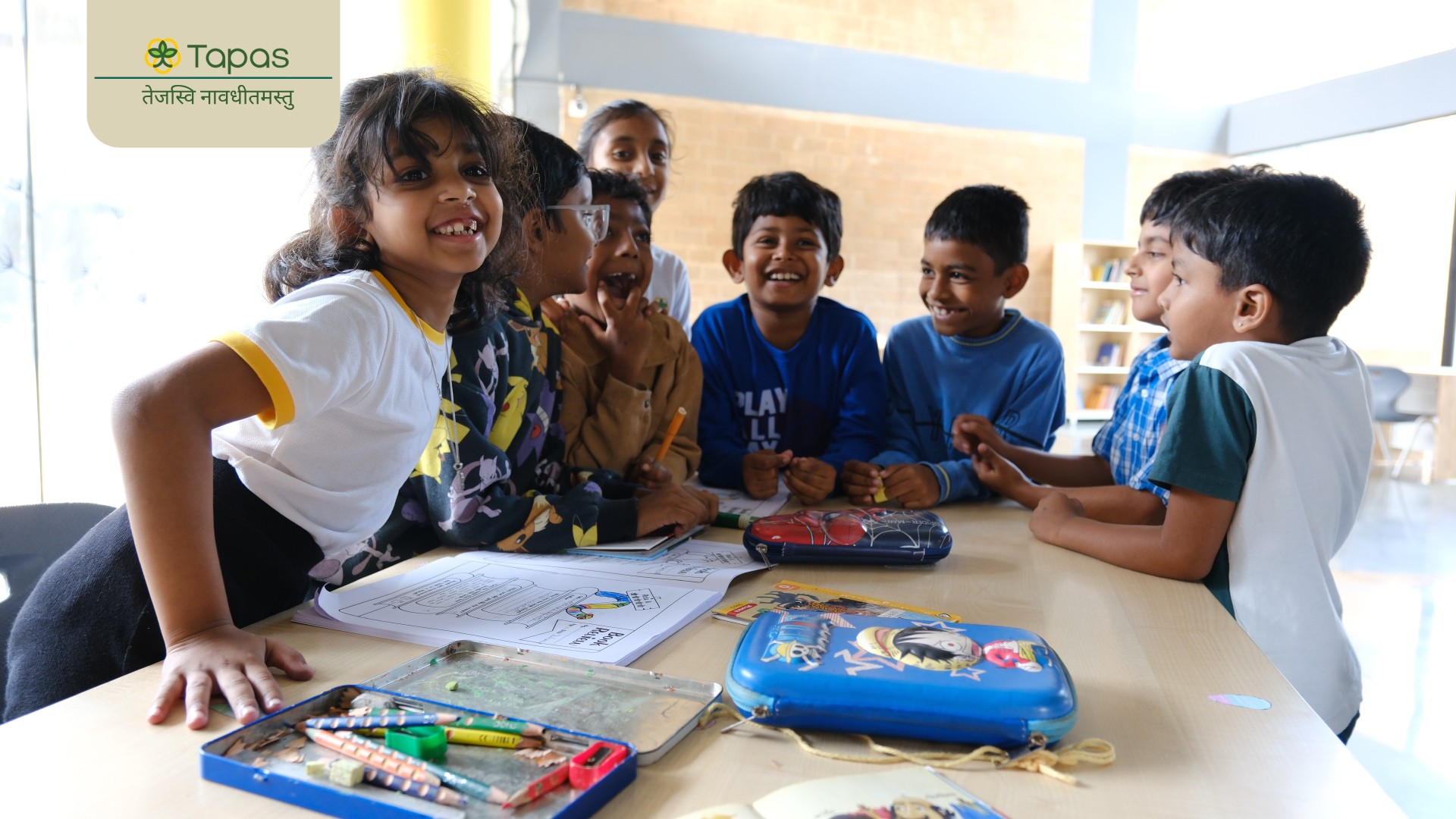
Have you noticed how children learn best when they are drawing, building, or posturing?
A child painting freely often learns more than one copying notes diligently.
That’s because creative learning in schools triggers curiosity, emotion, and imagination together.
When children play, create art, or explore freely, learning feels natural, not compulsory.
At Tapas Education in Bangalore, creativity is not just an extra subject.
It is the foundation of learning.
Art, play, and expression are entwined into every lesson, every project, and every conversation.
This blog explains why creativity in the classroom matters enormously.
You will learn:
What creative and play-based learning actually means
The importance of art in education
The permanent play based learning benefits
Real-life examples from Tapas classrooms
Easy ways parents can support creativity at home
Let’s survey why joyful, creative classrooms build confident, capable learners.
What Is Creative Learning in Schools?
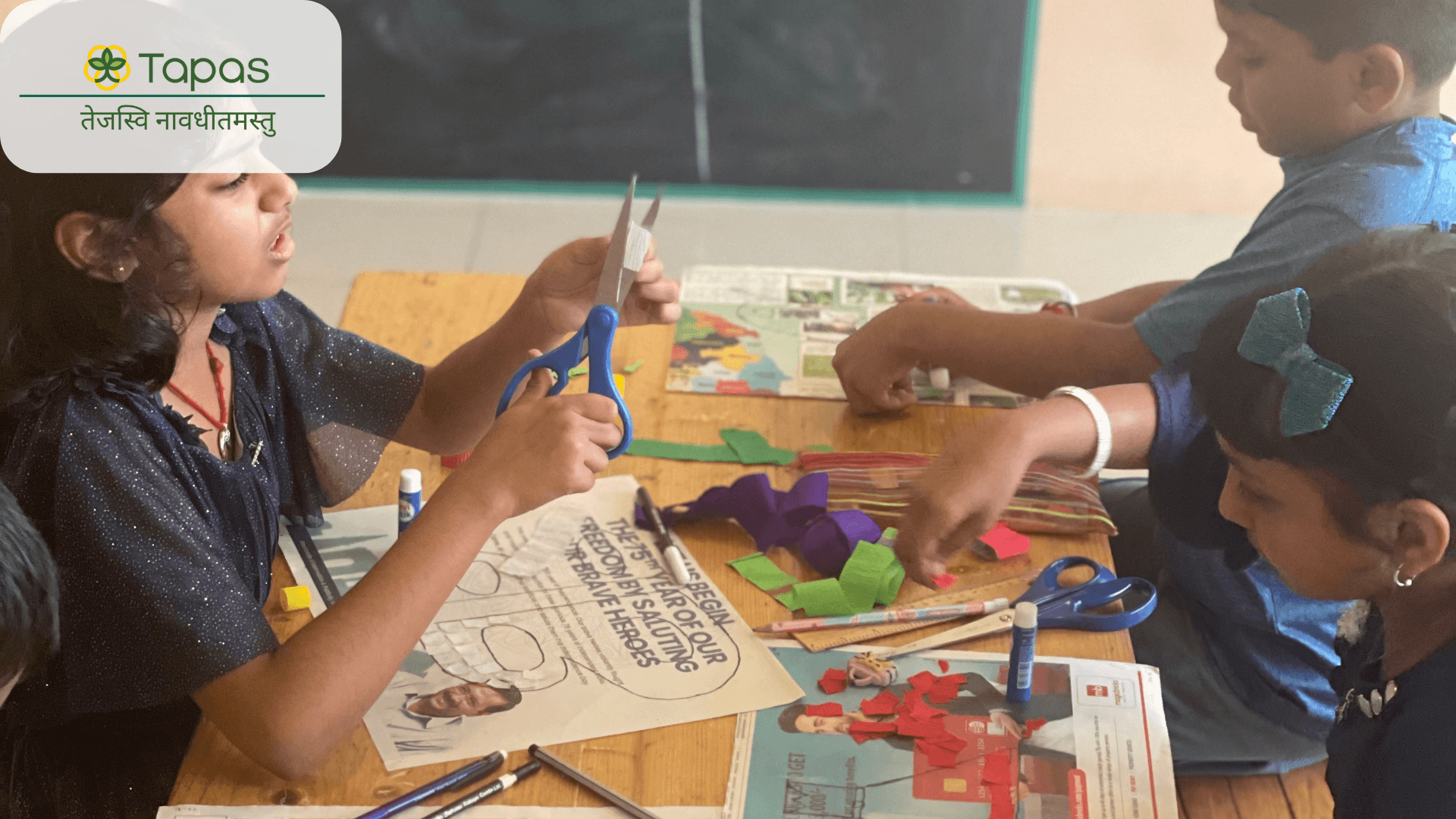
Creative learning means children learn through expression and exploration.
They draw ideas, design and build models, act out stories, and ask questions freely.
Instead of one correct answer, children investigate many possibilities.
This perspective respects how young minds naturally learn.
Creativity in the classroom is not about making artists only.
It builds thinkers, problem-solvers, and sanguine communicators.
Why Creativity Matters in Education
Creativity is not optional in today’s world.
It is crucial for adaptability, innovation, and emotional intelligence.
Research shows children remember more when learning necessitates movement, colour, and emotion.
That’s why the importance of art in education goes beyond aesthetics.
Art and play help children:
Understand abstract ideas visually
Express emotions safely
Develop patience and focus
Build confidence without fear
Albert Einstein once said:
“Creativity is intelligence having fun.”
That describes a Tapas classroom aptly.
Key Benefits of Art and Play-Based Learning
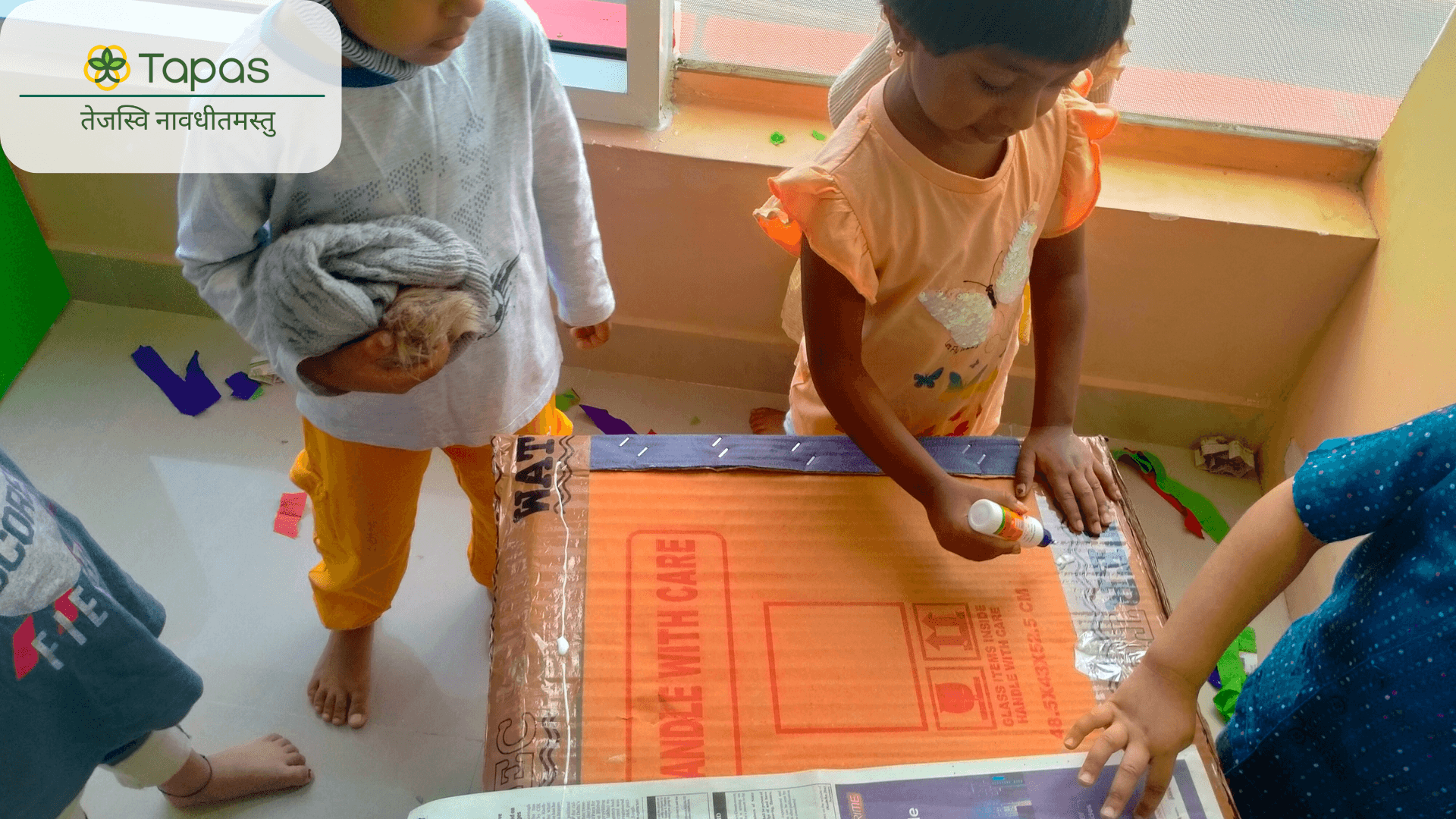
Play based learning benefits extend across academics and life skills.
Here are the most powerful consequences:
Deeper Understanding
Children grasp concepts through experience, not memorisation.Emotional Expression
Art gives children a safe language for sentiment.Stronger Problem-Solving
Play encourages trial, error, and revolution.Better Collaboration
Group activities teach listening and teamwork.More Confidence
Children feel proud of what they create.Love for Learning
Joy restores fear and pressure.
How Tapas Combines Art, Play, and Learning
At Tapas Education, creativity flows through every subject.
It is not restricted to art periods.
ACTIVITY | LEARNING AREA | SKILLS DEVELOPED |
Puppet Storytelling | Language | Expression, confidence |
Clay City Models | Geography + Science | Spatial thinking |
Music-based Math Games | Mathematics | Rhythm, logic |
Free Art Journalling | Reflection | Emotional awareness |
Real Classroom Example
Students once prospected “community helpers” by role-playing doctors, farmers, and shopkeepers.
They painted, acted, canvassed neighbours, and presented findings.
Learning became personal, joyful, and memorable.
Simple Steps Teachers Utilise to Encourage Creativity
Teachers at Tapas follow common but powerful practices:
Encourage questions without judgement
Let multiple ways to show understanding
Ply open-ended materials like paper, blocks, colours
Allow time for free play and reflection
Celebrate endeavour, not perfection
These steps erect safe spaces for imagination to grow.
How Parents Can Assist Creativity at Home
You don’t require expensive tools.
Creativity grows through freedom and trust.
Try these at home:
Keep art supplies easily accessible
Permit unstructured play time
Ask “What are you making?” instead of “What is it?”
Encourage storytelling and pretend play
Display your child’s creations with pride
When creativity is valued at home, confidence grows everywhere.
FAQs
Is play-based learning suitable for academics?
Yes. It strengthens understanding and retention clearly.
Will children become undisciplined?
No. Clear boundaries merged with freedom always build responsibility.
Is creativity useful for the future?
Completely. Creative thinkers adapt faster and solve better.
Conclusion
Creativity is not a diversion from learning.
It is learning.
At Tapas Education , art, play, and curiosity lead every child’s journey.
We believe children learn best when they feel secure, joyful, and inspired.
By embracing creative learning in schools, we prepare children not just for exams; albeit for life.
Want to see creativity flutter in classrooms?
Visit Tapas Education in Bangalore and experience learning that celebrates imagination.