Writer
Can a classroom mould the way a child thinks?
Most adults remember stiff benches, silent rows, and chalkboard lectures.
But today’s world dictates something different.
Children need classrooms that spark movement, conversation, and imagination, not just compliance.
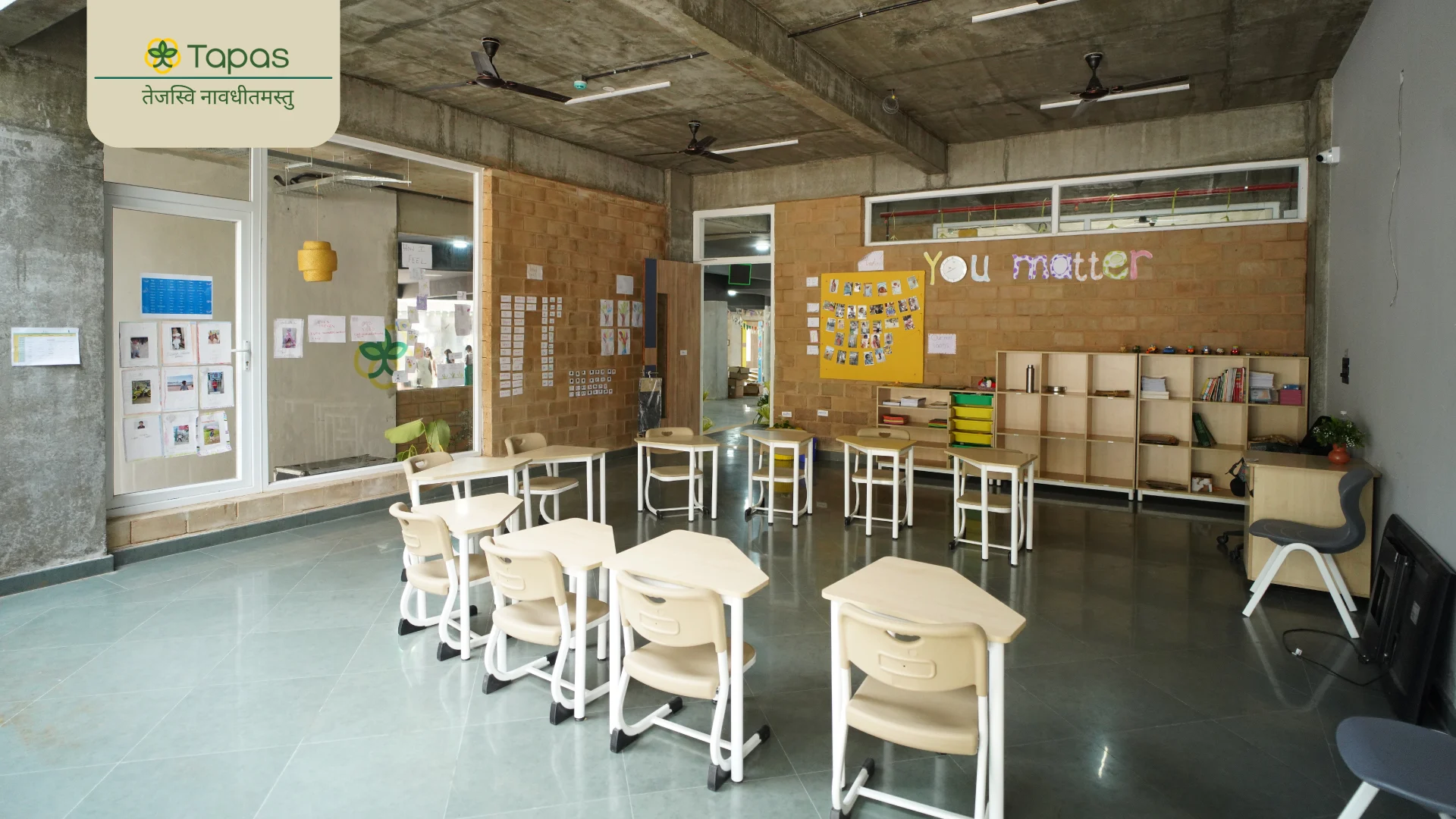
At Tapas Education in Bangalore, learning does not just remain confined to the desks.
Children build, collaborate, debate, and survey every corner of the room.
The space itself motivates curiosity.
These are the fundamentals of project-based learning classroom design.
A PBL-friendly classroom is not about elaborate or expensive equipment.
It is about designing learning spaces for kids that support real-life thinking.
In this blog, you’ll learn:
What makes a PBL-ready classroom
How layout impacts student credence
Actual examples from Tapas classrooms
Simple and easy ideas to apply even at home
Let’s check out what a progressive education environment actually looks like in practice.
What Is a PBL-Friendly Classroom?
A PBL-friendly classroom reinforces learning through doing.
Children should be able to:
Move effortlessly between activities
Work alone or in groups
Obtain materials without asking
The pivot shifts from “Where should they sit?” to “How can they think better?”
Key Elements of Project-Based Learning Classroom Design
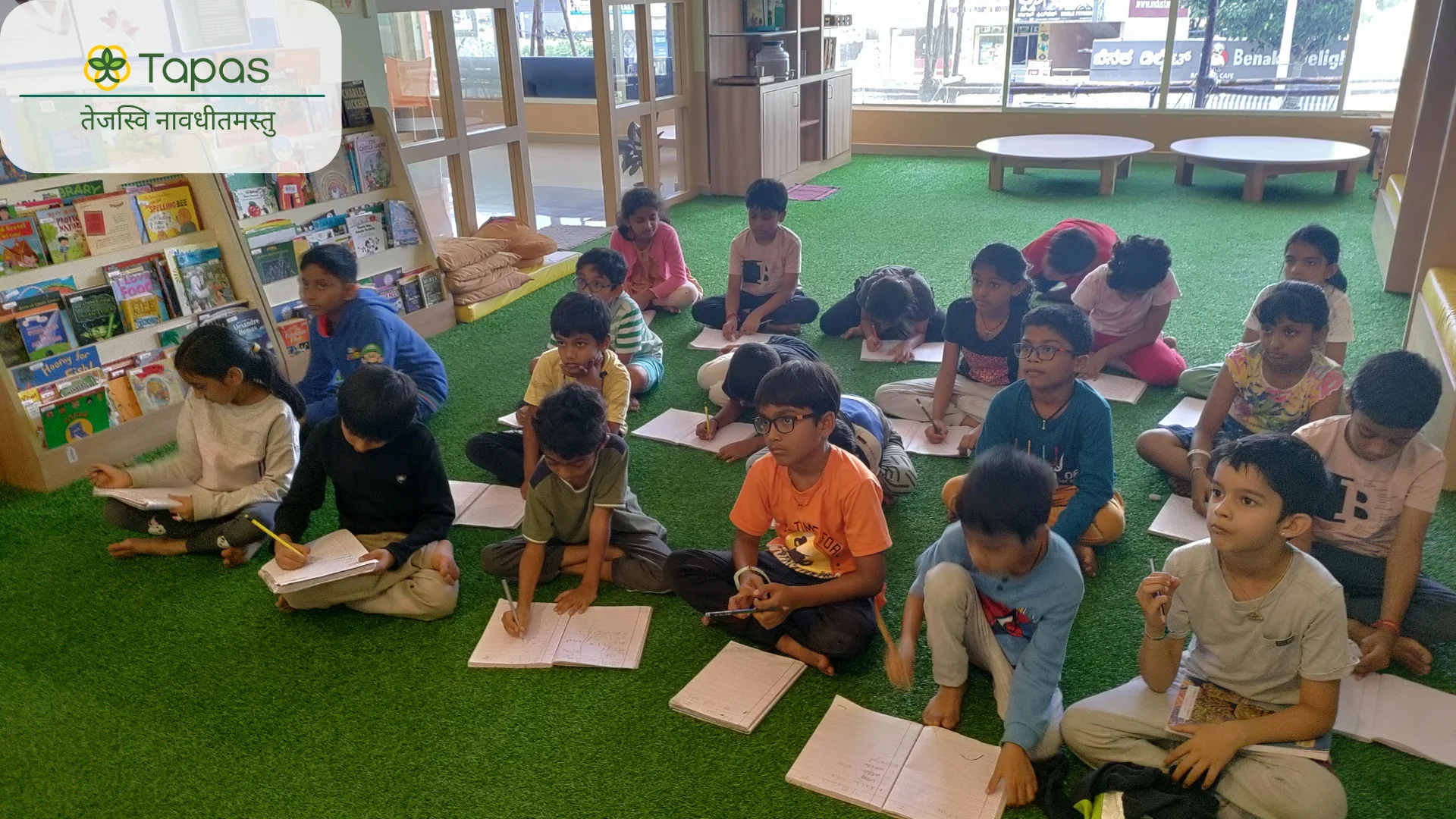
1. Flexible Seating for Freedom
Conventional benches restrict movement.
Instead, employ:
Bean bags
Floor mats
Standing desks
Low tables or stools
Children select where they work based on mood and task.
This improves ownership and engagement.
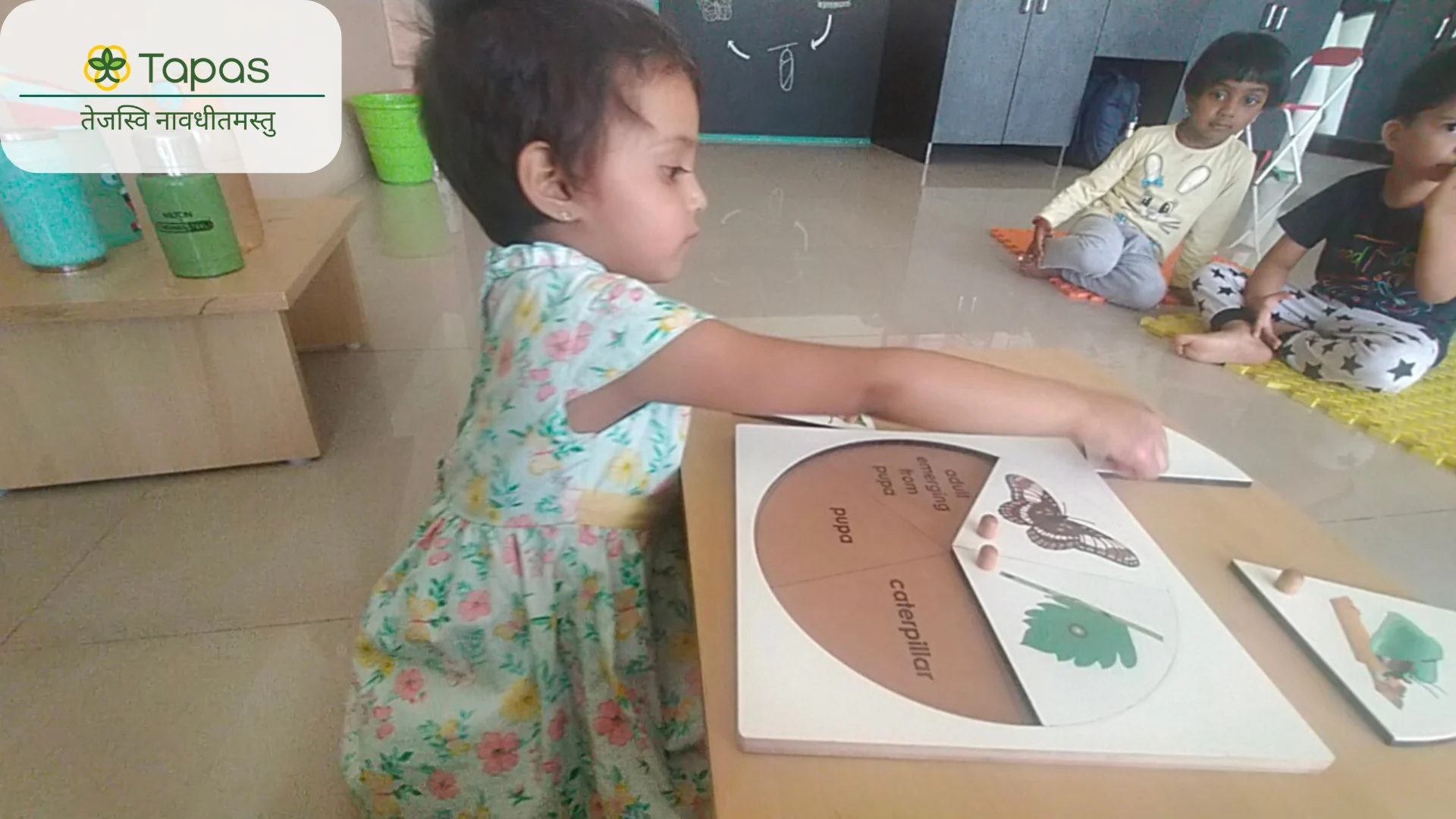
2. Maker Corners for Experimentation
Every PBL space must incorporate DIY zones.
These can hold:
Art supplies
Science tools
Recyclable materials
Interest grows when hands stay busy.
3. Display Walls for Pride
Walls should showcase work in progress, not just ideal results.
This builds confidence and encourages effort over perfection.
4. Outdoor Extensions
Learning does not end at the classroom door.
Outdoor patches, balconies, or courtyards become:
Nature labs
Reading gardens
Reflection corners
Student Engagement Tips Through Space Design
To keep energy peaked, teachers at Tapas use these strategies:
Rotate seating weekly
Set “Challenge Stations” with puzzles
Name each zone imaginatively (Example: Think Tank, Calm Corner)
Utilise warm colours for comfort and bright accents for excitement
Let student suggest rearrangements
How Tapas Education Designs Its Classrooms
Tapas follows a children-first structure instead of teacher-first planning.
Space Type | Purpose | Student Impact |
Collab Tables | Group Projects | Active Discussion |
Reading Caves | Solo Exploration | Peace and Focus |
Outdoor Studio | Science and Art | Freedom to Experiment |
A parent once said, “My child stopped saying ‘I go to class.’ Instead he now says, ‘I build in my space.’”
Can Parents Create PBL Spaces at Home?
Positively!
You don’t need a large room or expensive furniture.
Try these easy and simple tricks:
Convert a balcony/verandah into a mini maker space
Make use of open baskets instead of closed cupboards
Hand a Question Wall utilising sticky notes
Let the kids rearrange their desk every month
Place everyday tools where they can experiment ingeniously
FAQs
What is a PBL-friendly classroom design?
A PBL-friendly classroom design is a flexible learning space that supports collaboration, creativity, and hands-on exploration. It encourages students to learn by doing rather than just listening.
How do learning spaces for kids impact their engagement?
Well-designed learning spaces for kids promote movement, curiosity, and teamwork. When children can choose where and how to work, their focus and engagement naturally increase.
What are key elements of a progressive education environment?
A progressive education environment includes flexible seating, maker corners, display walls, and outdoor learning zones. These features make learning more dynamic and student-centered.
What are effective student engagement tips through space design?
Effective student engagement tips include rotating seating layouts, naming classroom zones, and adding challenge stations. These keep learning fresh and interactive.
Can parents create PBL-friendly spaces at home?
Yes! Parents can design small learning spaces for kids at home using simple tools like open baskets, question walls, and flexible seating to encourage curiosity and independent thinking.
Final Thoughts
A classroom should not compel children to stay still.
It should summon them to think, build, share, and grow.
The correct space does not just support learning : it becomes a learning partner.
Tapas Education in Bangalore proves that powerful and dynamic education comes from thoughtful design, not strict control.
Would you like to see a PBL classroom in action?
Visit Tapas Education and step into a space where every corner teaches something.