Writer
Can you recall the last time your child learned something under a tree?
Not from a screen. Not from a worksheet. But from touching, observing, and exploring.
Children are genuinely curious about the world around them.
They learn best when their senses are active and their minds are free.
That is why nature based learning is gaining rapid and strong attention across progressive schools worldwide.
In cities like Bangalore, where children spend more time indoors than ever before, outdoor learning in schools offers a relatable and powerful balance.
It brings learning back to its roots through experience, movement, and keen observation.
At Tapas Education, nature is not a break from learning.
It is the learning space.
Lessons often begin outdoors, where real questions are posed which lead to real understanding.
In this blog, you will learn:
What nature-based and outdoor learning actually means
Why it is the heart of modern experiential education methods
The core and main benefits for children
True-life examples from Tapas classrooms
How parents can support outdoor learning easily at home
Let’s explore why nature is becoming one of the most majestic classrooms today.
What Is Nature-Based Learning?
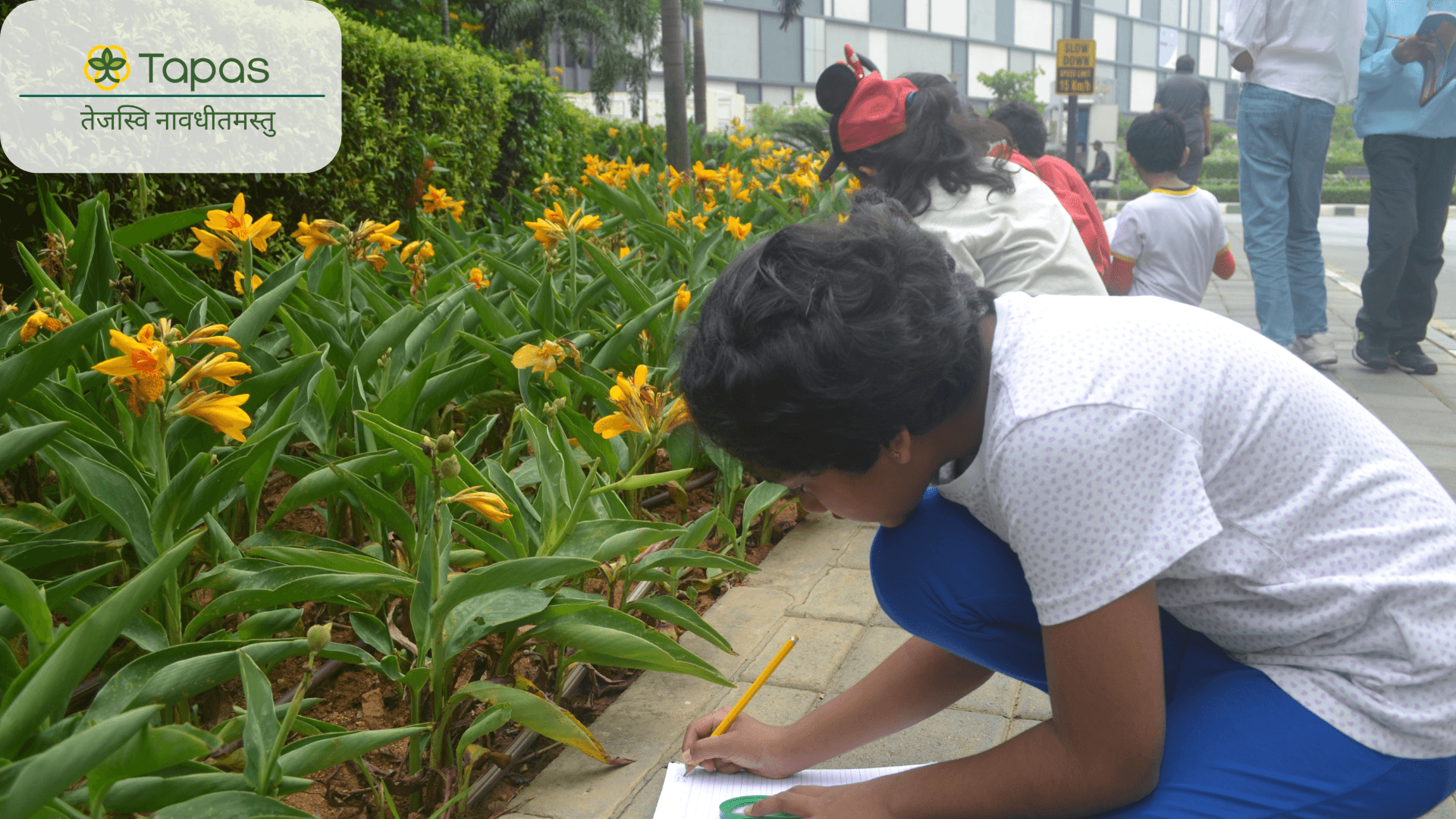
Nature based learning means children learn directly from what nature provides.
They observe plants, soil, insects, weather, and ecosystems instead of only reading about them in classrooms.
This approach encourages:
Learning through all five senses
Asking questions based on real observations
Joining concepts to everyday life
It is a key part of experiential education methods, where experience comes before interpretation.
Why Outdoor Learning Matters Today
Children today spend most of their time indoors.
This influences attention, physical health, and emotional balance.
Outdoor learning in schools helps restore this balance by:
Lessening stress and anxiety
Ameliorating focus and attention
Encouraging natural movement
Research shows children learn better when they move and inspect.
As one educator said,
“Nature does not hurry, yet everything is accomplished.”
That natural pace suits children perfectly.
Benefits of Environmental Learning for Students
Environmental learning for students aids both academics and life skills.
Here are the most important advantages:
Deeper Understanding
Children remember concepts better when they see or experience them in real life.Stronger Curiosity
Nature encourages incessant questioning and discovery.Improved Physical Health
Outdoor movement supports coordination and endurance.Emotional Wellbeing
Natural spaces calm the mind and decrease overstimulation.Environmental Responsibility
Children learn to care for what they experience minutely.
How Tapas Education Uses Nature as a Classroom
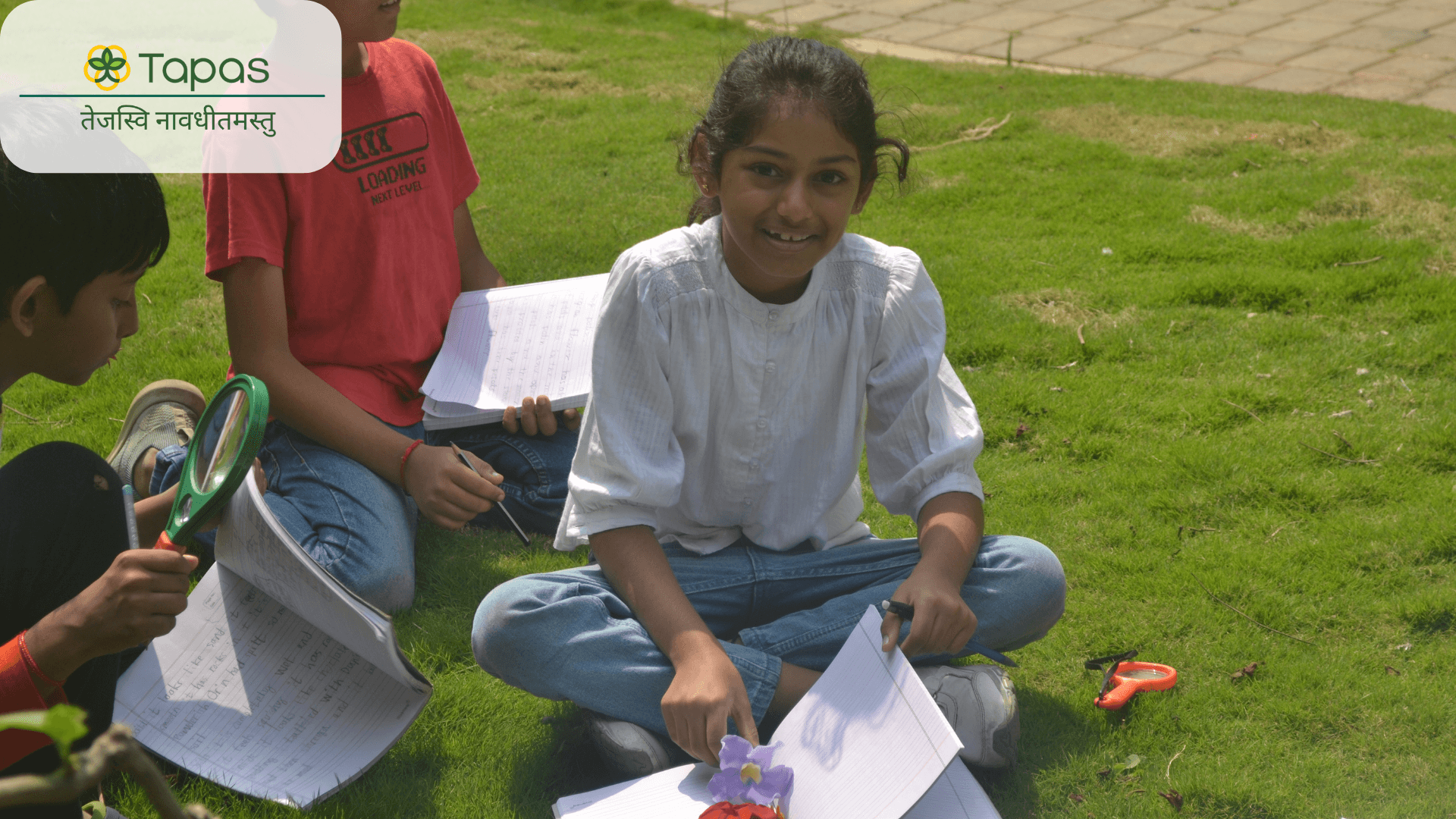
At Tapas Education, outdoor learning is planned, purposeful, and integrated.
It is not limited to a few field trips.
OUTDOOR ACTIVITY | LEARNING AREA | SKILLS DEVELOPED |
Garden Observations | Science | Observation, Patience |
Soil and Compost Projects | Environment | Responsibility |
Outdoor Storytelling | Language | Expression, Listening |
Nature-based Math Games | Mathematics | Logical Thinking |
Real Classroom Example
Students once studied water cycles by observing puddles after it had rained.
They tracked evaporation, plant absorption, and soil moisture.
The lesson stayed with them far longer than diagrams ever could.
Simple Steps Schools Use for Outdoor Learning
Teachers at Tapas follow simple principles:
Begin lessons with outdoor observation
Encourage note-taking through drawings
Allow absolute exploration within clear boundaries
Mirror indoors after outdoor experiences
Connect nature findings to classroom concepts
This keeps learning structured yet flexible.
How Parents Can Support Outdoor Learning
You don’t need a forest or large garden even
Nature based learning can happen anywhere.
Try these simple ideas:
Encourage park walks with observation queries that you can answer
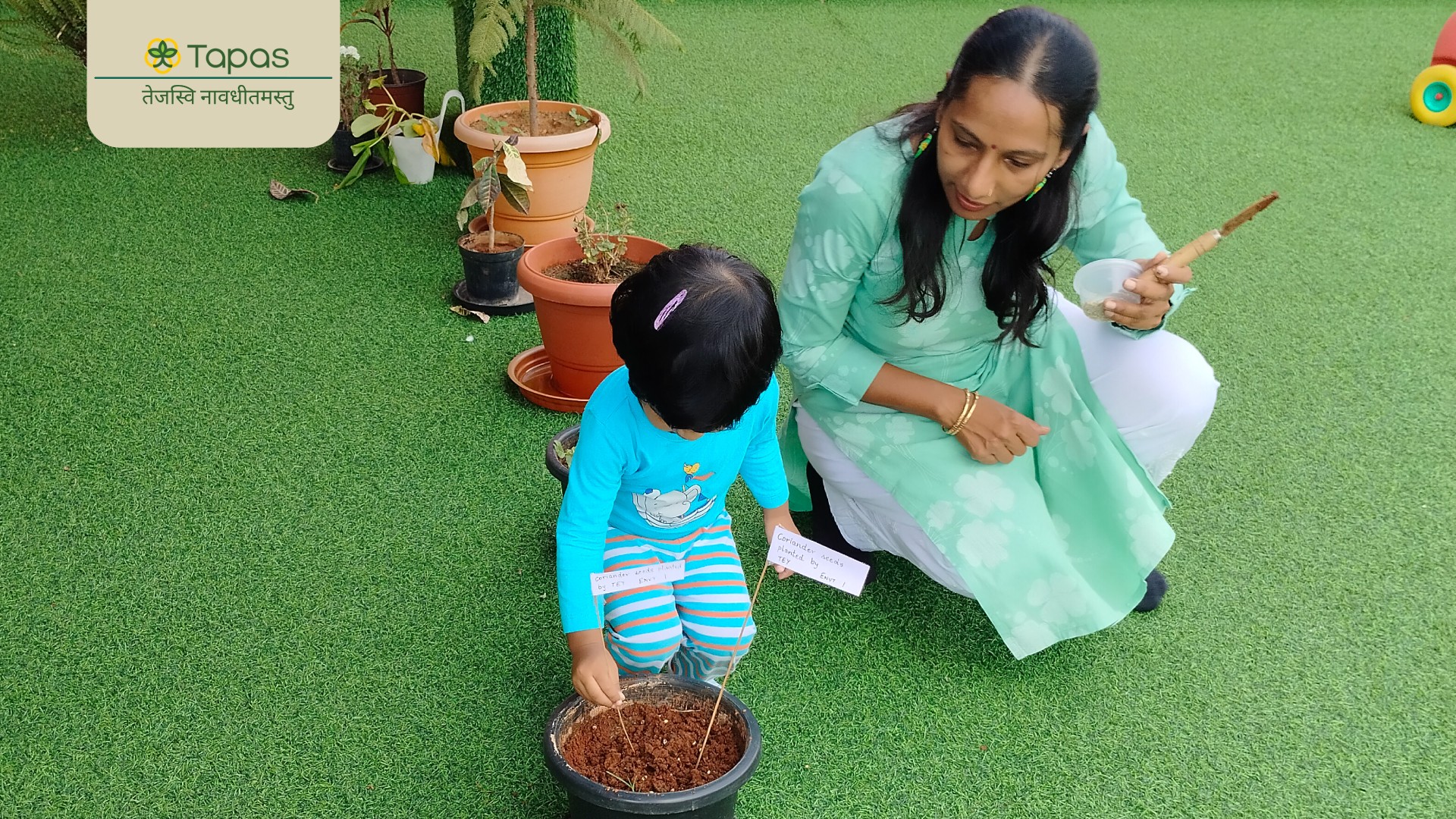
Grow small plants at home with help from the children
Let children track weather changes and ask for updates
Utilise balconies for bird or insect watching or even cloud movements
Talk about nature respectfully, mindfully and curiously
These moments build strong connections to learning and life.
Conclusion
Nature teaches lessons no textbook can.
It forms curiosity, calmness, and confidence together.
At Tapas Education , learning flows between classrooms and open spaces.
Children grow not only academically but also emotionally and socially.
By enfolding outdoor learning in schools, we help children connect deeply with the world they live in.
Want to see nature-based learning for real?Visit Tapas Education in Bangalore and experience a classroom without walls.
FAQ: Nature-Based & Outdoor Learning in Schools
How does outdoor learning in schools benefit children academically?
Outdoor learning in schools improves academic outcomes by increasing focus, curiosity, and concept retention. When students learn concepts like science, math, or language through real-life outdoor experiences, they understand ideas more deeply and remember them longer. Research shows that movement and experiential exposure enhance problem-solving and critical thinking skills.Why are experiential education methods important for modern education?
Experiential education methods prioritize learning through direct experience rather than passive instruction. These methods help children develop critical life skills such as observation, decision-making, collaboration, and creativity. By learning through doing, students connect theory to practice, which supports deeper understanding and prepares them for real-world situations.What is environmental learning for students and why does it matter?
Environmental learning for students helps children understand natural systems and their role within them. It builds environmental awareness, responsibility, and empathy toward nature. This approach not only supports academic growth but also encourages sustainable thinking, emotional wellbeing, and respect for the environment from an early age.Can nature based learning work in urban schools like those in Bangalore?
Yes. Nature based learning can be effectively implemented even in urban settings through gardens, courtyards, nearby parks, balconies, and structured outdoor activities. Urban schools can integrate outdoor learning into daily lessons by using local natural elements, making it practical, accessible, and impactful for city-based students.What is nature based learning and how is it different from traditional classroom learning?
Nature based learning is an educational approach where children learn directly through interaction with the natural environment—such as plants, soil, weather, and living organisms. Unlike traditional classroom learning that relies heavily on textbooks and screens, nature based learning emphasizes hands-on exploration, sensory engagement, and real-world observation, making learning more meaningful and long-lasting.