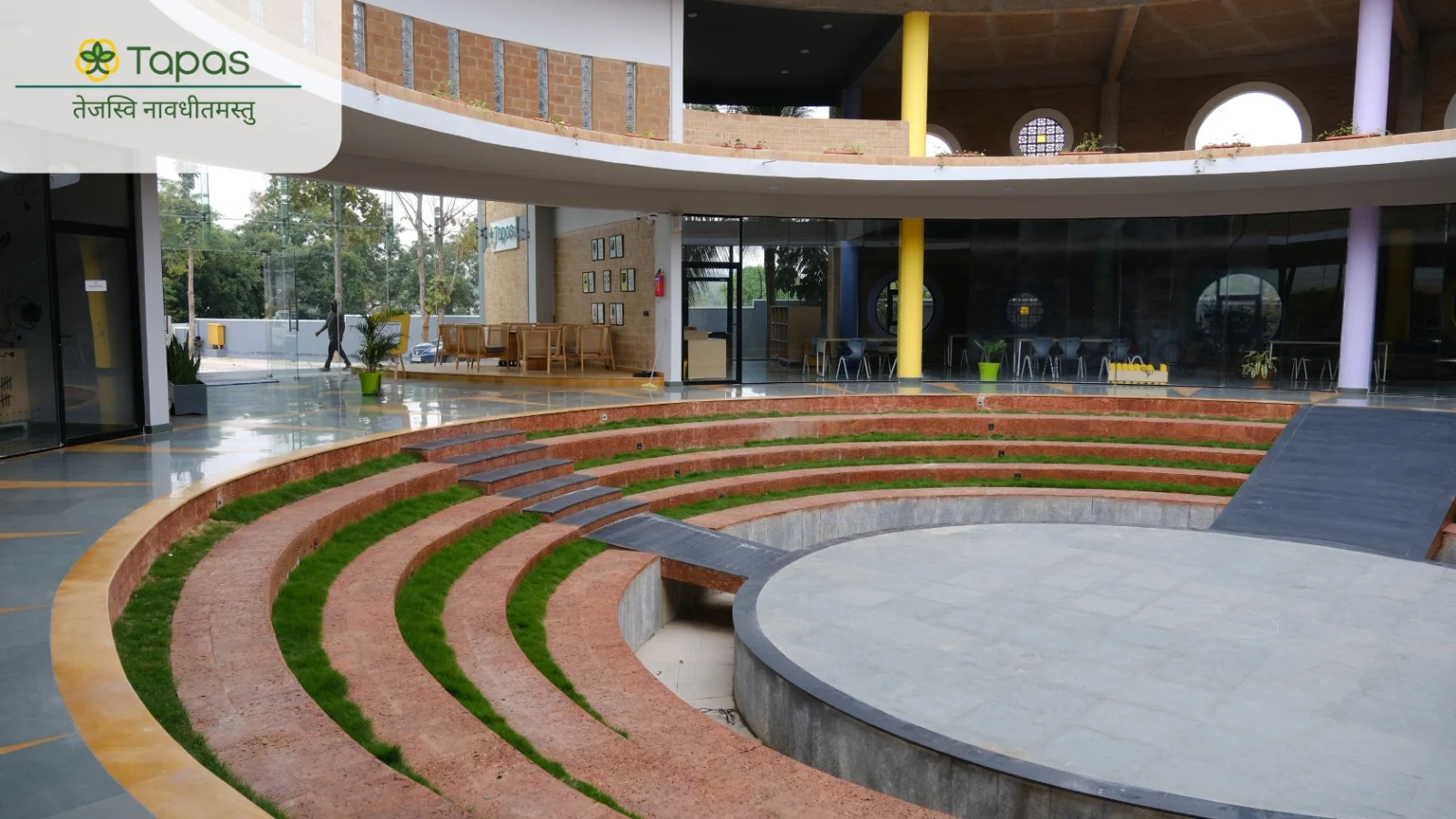
Imagine if the classroom itself could improve how children learn!
Visualise students walking into a space that sparks curiosity, collaboration, and creativity instantly.
Traditional classrooms often follow a rooted structure.
Rows of desks, limited movement, and one-way teaching dominate the environment.
But new-age learners need spaces that encourage interaction, exploration, and independent thinking.
This is why innovative learning spaces in schools are becoming crucial today.
Learning environments now play a direct role in student engagement and academic growth.
At Tapas Education in South Bangalore, classrooms are designed around how children naturally learn best.
Students move, collaborate, create, astudnetnd explore within pliable learning environments.
In this blog, you will learn:
What innovative learning spaces really mean
Why classroom design affects learning goals
How student centered classroom design aids engagement
Real examples from Tapas classrooms
How experiential learning spaces improve academic growth
Let’s explore how thoughtful learning spaces metamorphose education.
What Are Innovative Learning Spaces?
Innovative learning spaces in schools are environments designed to support active and flexible learning.
They move beyond conventional classroom layouts.
These spaces often comprise:
Flexible seating arrangements
Collaborative learning zones
Creative corners and maker spaces
Outdoor learning areas
Interactive and hands-on learning setups
The goal is simple and easy.
Generate spaces that support curiosity, comfort, and engagement.
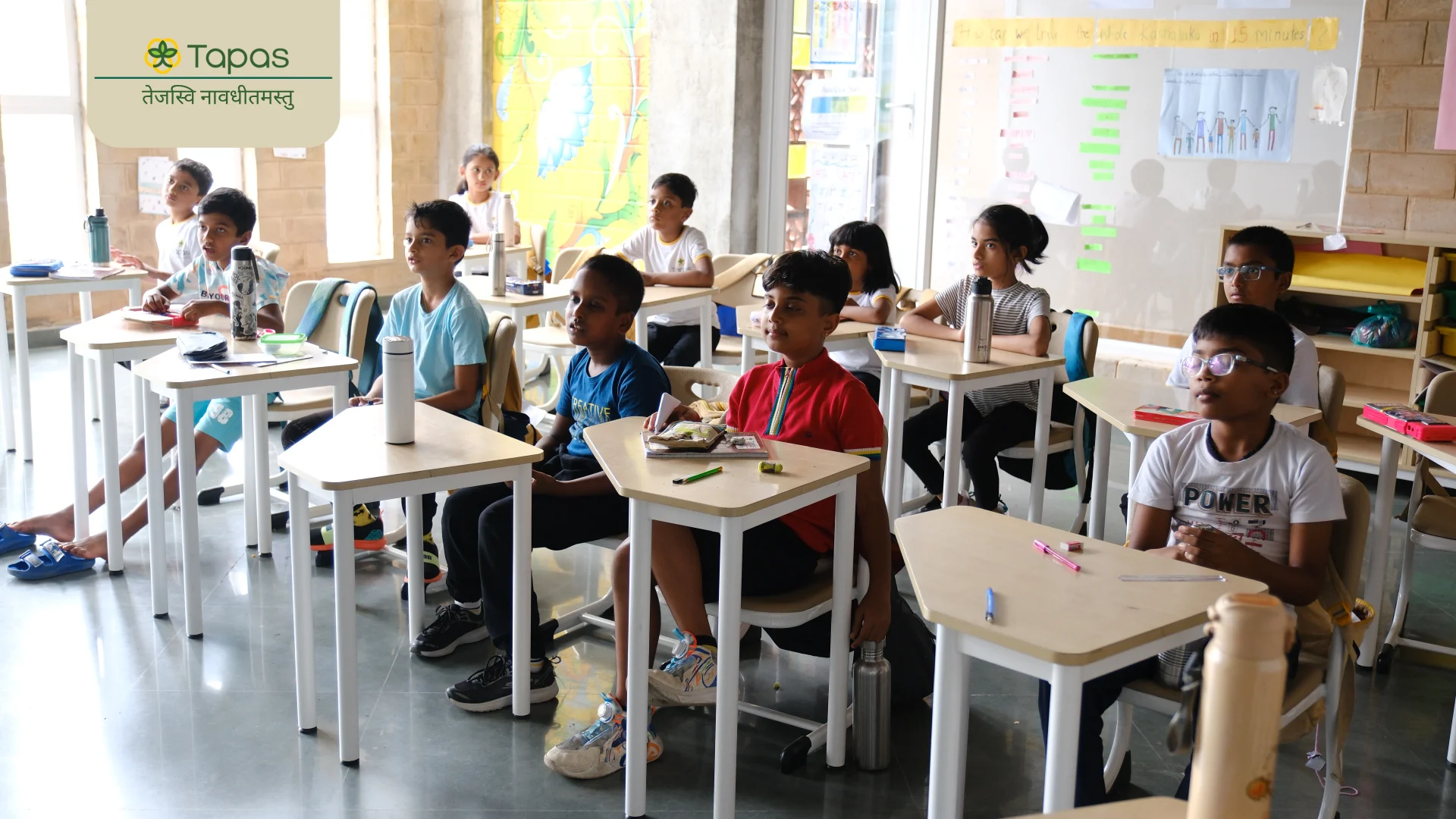
Why Classroom Design Matters
Children spend most of their day inside learning environments.
The design of these spaces affects focus, motivation, and participation straightaway.
Research shows students engage better in environments that allow movement and collaboration.
Poorly designed classrooms can lead to:
Lessened attention spans
Limited interaction
Passive learning habits
Contemporary learning spaces encourage active participation instead.
How Student-Centered Classroom Design Works
Student centered classroom design pivots on learner needs rather than teacher convenience.
It creates environments where students can:
Work independently
Collaborate in groups
Explore creatively
Reflect silently when needed
The classroom becomes flexible instead of rigid.
Key Features Include:
Flexible seating
Natural lighting and open spaces
Interactive learning materials
Spaces for discussion and contemplation
Access to experiential learning tools
Benefits of Experiential Classroom Learning
Experiential classroom learning combines the environment with action-based education.
Key benefits include:
Higher Student Engagement
Students participate actively instead of listening passively.Upgraded Collaboration
Open spaces encourage teamwork and discussion.Better Creativity
Flexible environments assist exploration and expression.Stronger Academic Understanding
Hands-on learning refines concept clarity.Decreased Stress and Fatigue
Comfortable environments improve emotional wellbeing.
How Tapas Education Designs Learning Spaces
At Tapas Education, learning spaces are designed around curiosity and interaction.
SPACE TYPE | PURPOSE | STUDENT OUTCOME |
Collaborative Zones | Group Learning | Communication Skills |
Outdoor Learning Spaces | Nature-based Learning | Observation and Focus |
Creative Corners | Art and Storytelling | Expression and Imagination |
Reflection Spaces | Quiet Thinking | Emotional Regulation |
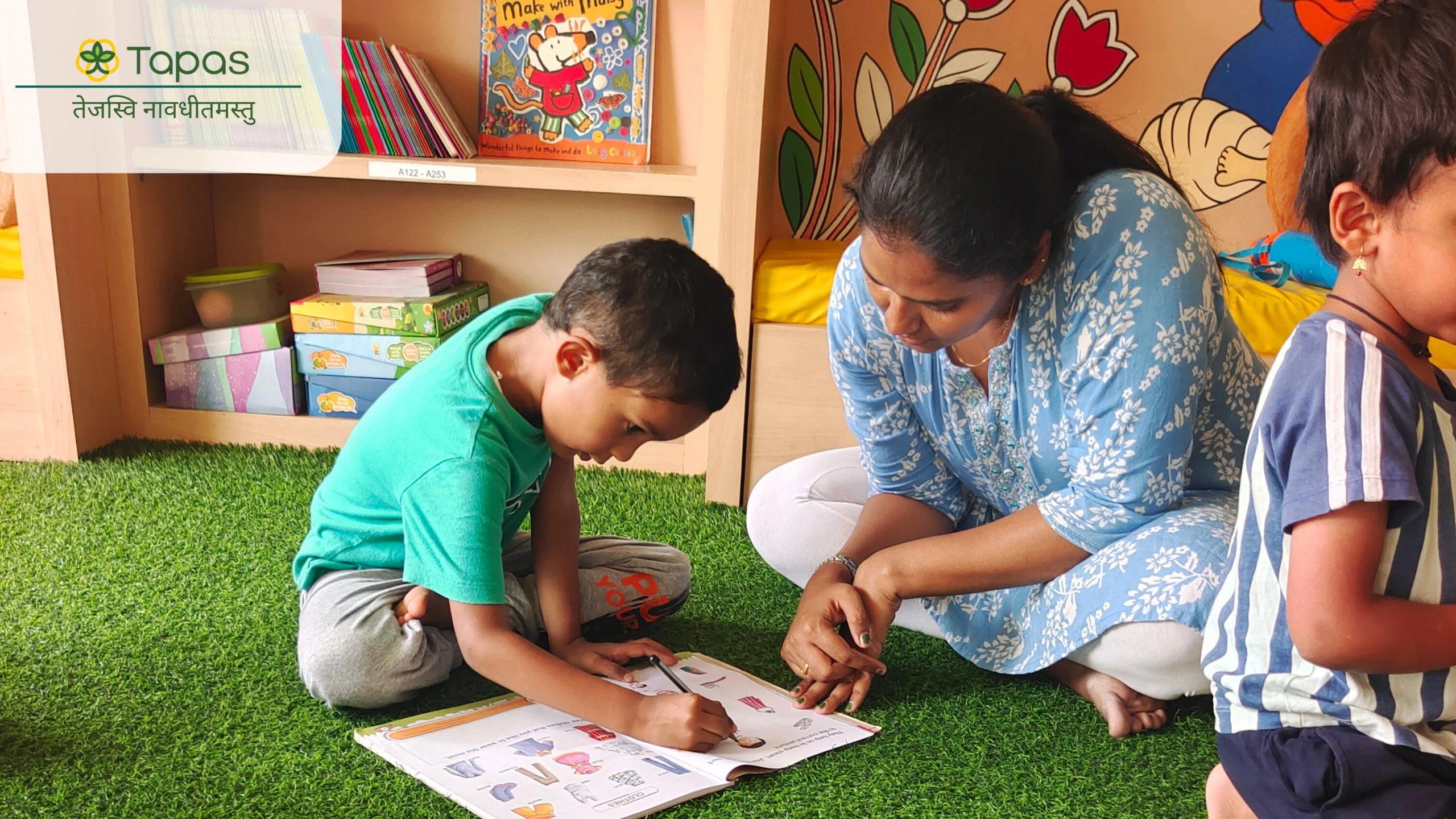
Real Tapas Classroom Example
Students once designed sustainable mini-cities during a project week.
They moved between research, design, and presentation zones freely.
The environment itself aided creativity and teamwork clearly.
How Learning Spaces Ameliorate Academic Growth
Academic growth improves when students feel engaged and emotionally safe.
Innovative spaces help students:
Stay centred longer
Participate confidently
Acknowledge concepts deeply
Build independent learning habits
The classroom becomes a tool for learning, not just a location.
What Parents Should Look For in Modern Schools
When visiting schools, inspect the learning environment carefully.
Look for:
Flexible and open learning areas
Student collaboration spaces
Access to experiential learning materials
Creative and outdoor learning zones
Calm and emotionally supportive environments
These features reflect future-ready education.
Conclusion
Learning spaces shape how children think, interact, and grow.
Contemporary classrooms must support curiosity, creativity, and collaboration.
Innovative learning spaces in schools create environments where students feel engaged and motivated.
They reinforce both academic growth and emotional wellbeing.
At Tapas Education, classrooms are designed to assist exploration, communication, and experiential learning naturally.
Want to experience future-ready learning spaces?
Visit Tapas Education in South Bangalore and discover classrooms designed for meaningful learning.
Frequently Asked Questions
What are innovative learning spaces in schools?
Innovative learning spaces in schools are flexible classrooms designed to improve creativity, collaboration, and student engagement through interactive and adaptive learning environments.How does student centered classroom design improve learning?
Student centered classroom design encourages collaboration, independent thinking, and active participation, helping students stay engaged and improve academic performance.Why is experiential classroom learning important for students?
Experiential classroom learning helps students learn through hands-on activities, projects, and real-world experiences, improving problem-solving and critical thinking skills.How do innovative learning spaces in schools increase student engagement?
Innovative learning spaces in schools use flexible seating, technology, and collaborative areas that make lessons more interactive and engaging for students.What are the benefits of experiential classroom learning in modern education?
Experiential classroom learning improves creativity, teamwork, communication, and practical knowledge, preparing students for real-world challenges and future careers.