Writer
Middle school is a big milestone in every child’s learning journey.
Children are no longer little kids, but they are not adults either.
They start asking deeper questions, forming opinions, and wanting to learn to feel relevant, to be seen and heard.
Yet, this is also the stage where many students lose interest in school.
Textbook-heavy lessons, rote memorisation, and pressure of many tests, exams and evaluations often fail to match their growing curiosity.
This is where project based learning in middle school makes a mighty difference.
At Tapas Education in South Bangalore , middle school classrooms are designed to meet learners at every point of their journey.
Students explore real problems, work on meaningful projects, and learn through experience rather than instructional designs alone.
In this blog, you will learn:
What project-based learning looks like in middle school
Why it is particularly effective at this age
Main benefits of experiential learning in classrooms
Real PBL examples for schools like Tapas
How inquiry-based learning supports independence and confidence
Let’s simplify this with clarity.
What Is Project-Based Learning in Middle School?
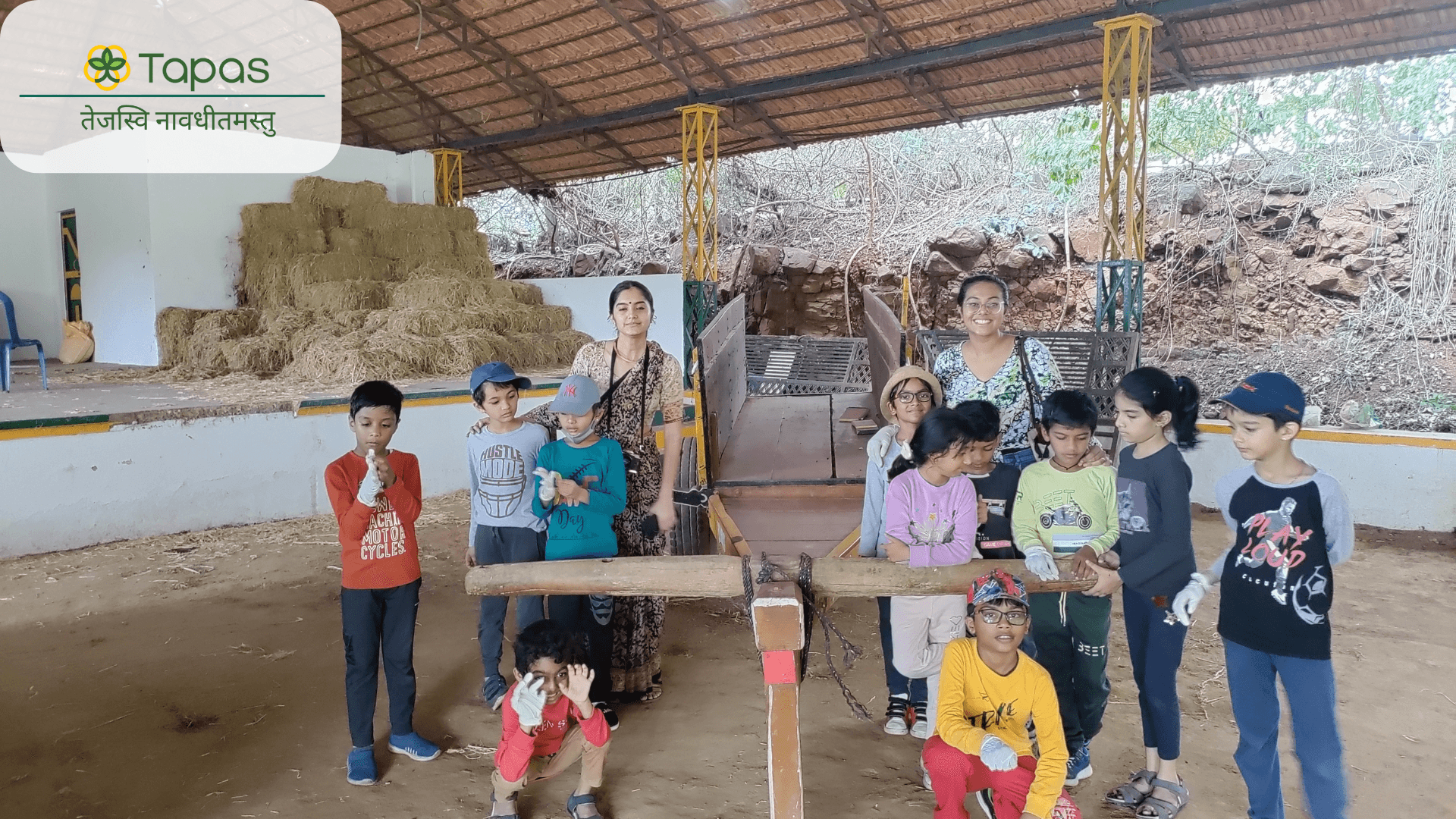
Project based learning in middle school means students learn concepts by working on expanded, meaningful projects.
These projects are driven by questions, challenges, or real-world problems.
Instead of starting with answers, learning starts with curiosity.
Students generally:
Ask questions
Research topics deeply
Collaborate with peers
Create solutions or presentations
Reflect on their learning
This approach strongly supports inquiry based learning, where students actively pursue understanding instead of passively receiving information.
Why Project-Based Learning Matters in Middle School
Middle school students covet independence and purpose.
They want to learn to feel connected to the real world.
Conventional methods often struggle to meet these needs.
Experiential learning in classrooms works better because it:
Complements students’ growing cognitive abilities
Uplifts critical thinking and reasoning
Builds emotional and social maturity
Makes learning feel meaningful, not imposed
Research shows students remember concepts longer when they learn by doing rather than rote learning.
At this age, relevance is everything.
Key Benefits of Project-Based Learning
Project-based learning supports both academic and life skills.
Here are the most predominant benefits for middle school learners:
Deeper Understanding
Students survey concepts thoroughly instead of rushing through chapters.Critical Thinking
Projects need planning, analysis, and decision-making.Collaboration Skills
Group work builds teamwork, communication, and compassion.Confidence and Ownership
Students take responsibility for their ideas and results.Real-World Connection
Learning attaches directly to real issues and experiences.Stronger Motivation
Questioning replaces fear and exam pressure.
These benefits make project-based learning especially powerful during middle school years.
How Project-Based Learning Works Step by Step
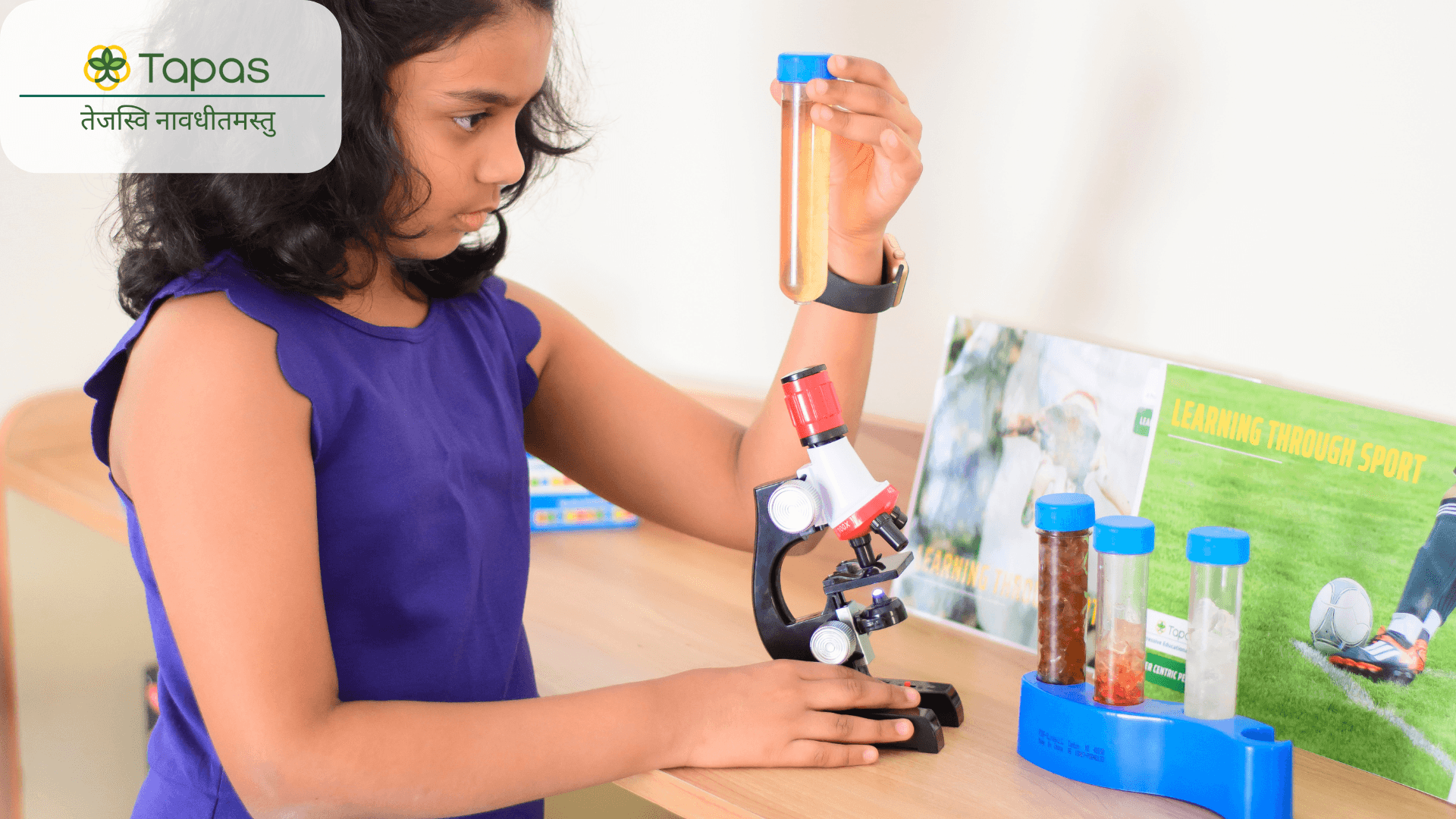
At Tapas Education in South Bangalore , projects follow a clear and supportive structure.
Typical steps include:
Major Question or Challenge
Students start with an open-ended question.Research and Exploration
They gather information through reading, discussion, and observation.Planning and Design
Students determine how they will present or solve the problem.Creation and Testing
Ideas turn into models, presentations, or real solutions.Reflection and Feedback
Students evaluate what worked, what didn’t, and why.
This structure keeps learning centred while allowing creativity and choice.
PBL Examples from Tapas Education
At Tapas Education, middle school projects incorporate multiple subjects naturally.
PROJECT | SUBJECTS INVOLVED | SKILLS DEVELOPED |
Sustainable City Design | Science, Geography | Systems Thinking |
Community Survey Project | Math, Social Studies | Data Analysis |
Historical Role-Play | History, Language | Research, Communication |
Water Conservation Campaign | Science, Environment | Problem-Solving |
Real Tapas Classroom Example
A group of middle school students explored the water scarcity in Bangalore.
They interviewed residents, studied rainfall data, and built water-saving models.
The project merged science, math, and civic awareness in one meaningful experience.
That’s inquiry-based learning in action.
How Inquiry-Based Learning Supports Independence
Inquiry-based learning gives students a mandate over their learning journey.
Instead of asking, “Is this correct?” students ask:
“Does this solution work?”
“What can we improve?”
“Why does this happen?”
Teachers usher the process without giving ready-made answers.
This builds independence, resilience, and confidence.
Conclusion
Middle school learning should challenge minds, not tire them.
It should inspire thinking, not just rote learning.
Project based learning in middle school helps students link ideas, ask better questions, and take ownership of learning.
It supports curiosity, collaboration, and confidence at a key developmental stage.
At Tapas Education, projects turn classrooms into spaces of exploration and impetus.
Students don’t just learn subjects.
They learn how to think.
Want to see project-based learning in action?
Visit Tapas Education in South Bangalore and experience how middle school learning becomes meaningful, significant, engaging, and future-ready.
Frequently Asked Questions
1. What is project based learning in middle school?
Project based learning in middle school is a teaching method where students learn concepts by working on real-world projects. Instead of memorising facts, they research, collaborate, create solutions, and reflect on their learning.
2. Why is project based learning effective for middle school students?
Middle school students need independence and real-world relevance. Project based learning builds critical thinking, teamwork, and problem-solving skills while making learning meaningful and engaging.
3. What are some PBL examples for schools?
Common PBL examples for schools include designing a sustainable city, conducting a community survey, creating a water conservation campaign, or presenting historical role-plays. These projects integrate multiple subjects and real-life skills.
4. How does experiential learning in classrooms improve understanding?
Experiential learning in classrooms helps students learn by doing. Hands-on activities and real-world projects improve retention, deepen concept clarity, and strengthen practical application skills.
5. How is inquiry based learning connected to project based learning?
Inquiry based learning drives project based learning. Students begin with open-ended questions, investigate possible solutions, and draw conclusions—developing independence, curiosity, and analytical thinking.