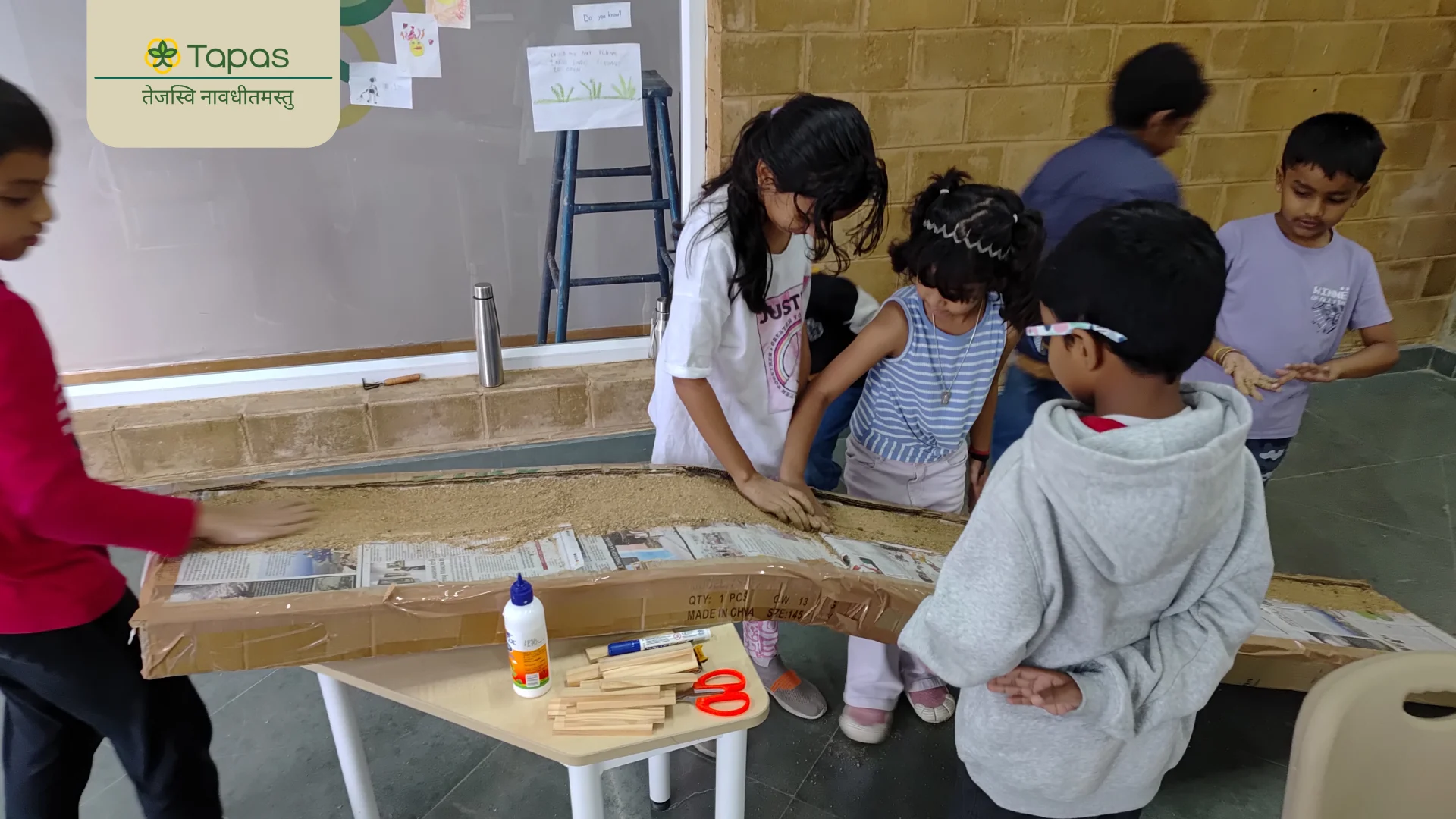
Why do some children cease from asking questions as they grow older?
In many classrooms, assignments pivot on correct answers, not curious thinking.
This generates a problem.
Children begin to dread mistakes, avoid risks, and depend on instructions.
Over time, creativity fades and resilience weakens.
In a fast-changing world, this is a serious void.
Children need to think independently, adapt quickly, and bounce back from challenges fast.
At Tapas Education in South Bangalore, learning looks and feels different.
Assignments are designed to spark curiosity, not control results.
Students explore, question, experiment, and reflect.
This is where curiosity based learning activities make a dynamic difference.
They encourage exploration while naturally supporting building resilience in students.
In this blog, you will learn:
Why traditional assignments curb creativity
How curiosity-driven tasks change learning
The role of creative learning methods for children
Real examples from Tapas classrooms
Effortless ways to encourage curiosity at home
Let’s understand how curiosity transforms learning and builds strong, confident learners.
When Learning Becomes About Right Answers
Many children begin school full of curiosity.
They ask endless “why” and “how” questions.
But over time, learning becomes methodical around:
Fixed answers
Step-by-step instructions
Fear of mistakes
This creates a shift.
Children stop exploring and start seeking approval.
Curiosity is replaced by conformity.
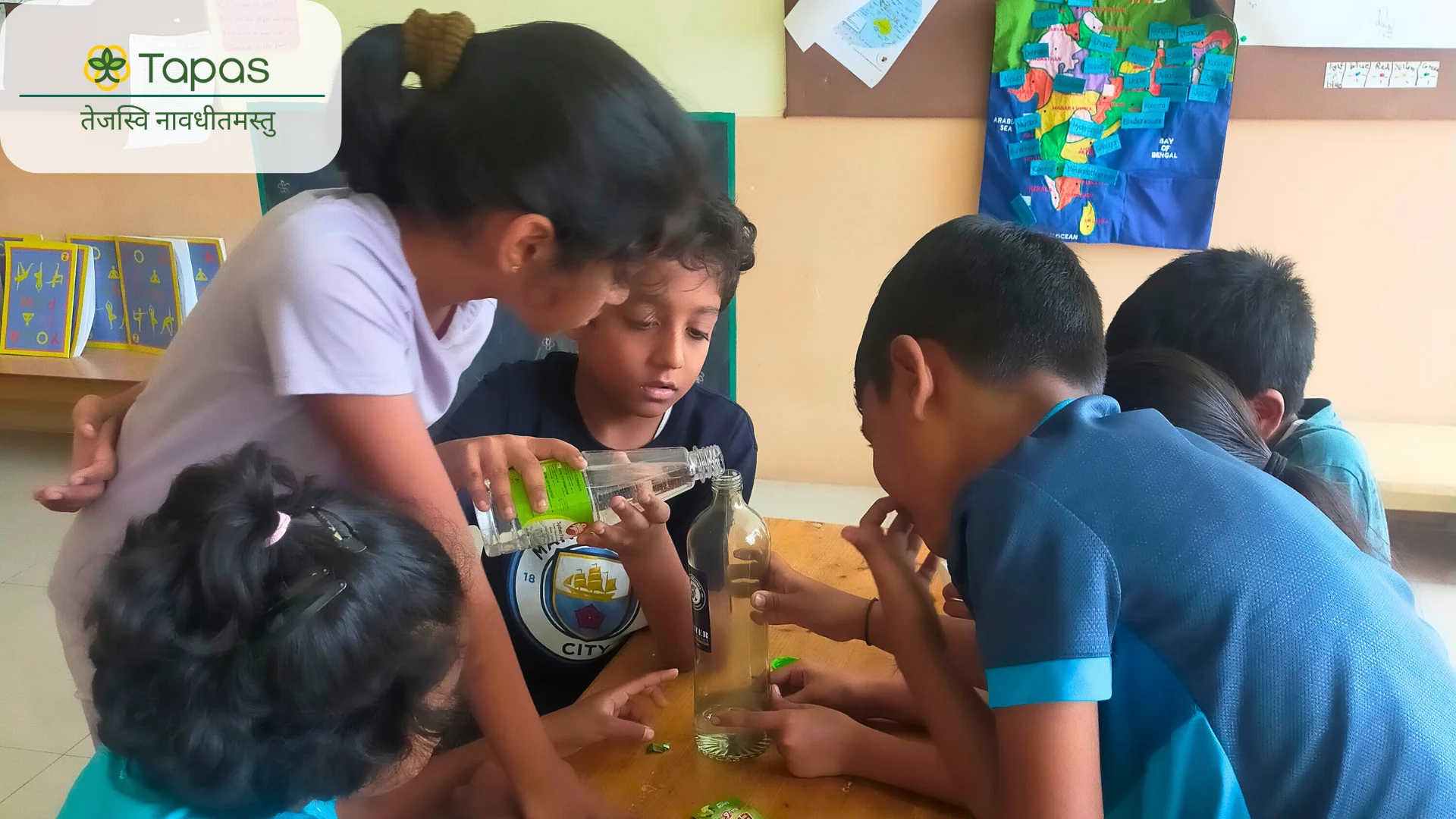
Why This Problem Matters
When curiosity decreases, learning becomes shallow.
Children memorise but do not truly understand.
More importantly, they grapple with failure.
Without exploration, they don’t learn how to handle mistakes.
This affects:
Confidence
Problem-solving ability
Emotional resilience
A child who avoids errors also avoids growth.
Curiosity-Based Learning Activities
Curiosity based learning activities encourage children to investigate ideas freely.
They focus on questions, not just answers.
In this approach:
Problems are open-ended
Multiple solutions are allowed
Exploration is encouraged
Reflection is part of learning
This makes learning meaningful and engaging.
How Curiosity Builds Creativity and Resilience
Curiosity and resilience are minutely connected.
When children explore, they naturally face challenges.
This helps in building resilience in students because they:
Try contrasting approaches
Learn from mistakes
Adjust their thinking
Keep going despite failure
Creativity is also refined because children think beyond fixed patterns.
Key Benefits of Creative Learning Methods
Creative learning methods for children offer strong long-term benefits.
Here are the most important ones:
Upgraded Problem-Solving Skills
Children learn to approach challenges from different angles.Higher Creativity
They create original ideas instead of copying answers.Stronger Resilience
Mistakes become part of the learning journey.Better Engagement
Learning feels exciting and meaningful.Confidence in Thinking
Children depend on their own ideas.
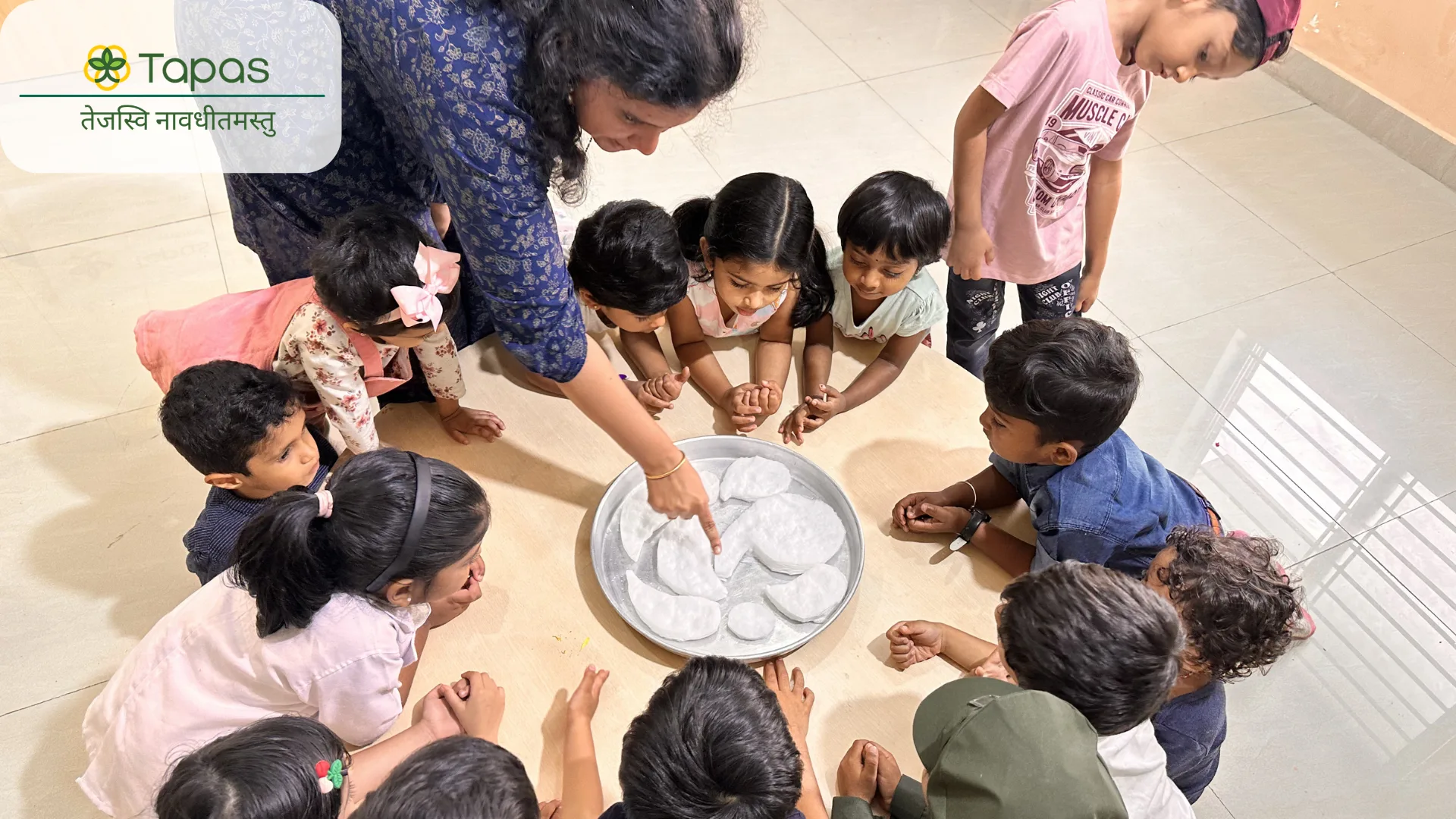
How Tapas Designs Curiosity-Driven Assignments
At Tapas Education, assignments are designed to inspire exploration.
Assignment Type | Approach | Outcome |
Open-ended questions | Multiple solutions | Creative thinking |
Real-world projects | Problem-solving | Practical understanding |
Reflection journals | Self-evaluation | Emotional awareness |
Group challenges | Collaboration | Teamwork skills |
Real Classroom Example
Students surveyed “how to reduce waste in their neighbourhood.”
They researched, observed, and proposed solutions.
Some ideas failed, others worked.
All students learned resilience and creativity through this process.
Simple Steps to Encourage Curiosity at Home
Parents can boost curiosity easily.
Try these:
Ask “What do you think?” instead of giving answers
Encourage experimentation and small failures
Let open-ended play and projects
Discuss real-world problems together
Celebrate effort, not just outcomes
These habits erect both thinking and confidence.
Conclusion
Curiosity is the kickoff point of all meaningful learning.
When children are encouraged to explore, they become confident thinkers.
Curiosity based learning activities aid children develop both creativity and resilience.
They learn not just what to think, but how to think.
At Tapas Education , assignments are designed to rouse curiosity, not restrict it.
Children grow through exploration, reflection, and real-world learning.
Want your child to think independently and grow confidently?
Visit Tapas Education in South Bangalore and encounter learning driven by curiosity.
Frequently Asked Questions
What are curiosity based learning activities for children?
Curiosity based learning activities encourage children to ask questions, explore ideas, and learn through discovery instead of memorisation.How do curiosity based learning activities build creativity?
Curiosity based learning activities promote imagination and problem-solving, making them effective creative learning methods for children.How does curiosity-driven learning help in building resilience in students?
It supports building resilience in students by encouraging trial, error, and learning from mistakes in a safe environment.What are the best creative learning methods for children?
The best creative learning methods for children include project-based tasks, open-ended questions, and hands-on exploration activities.Why is building resilience in students important in modern education?
Building resilience in students helps them handle challenges, adapt to change, and develop confidence for lifelong learning.