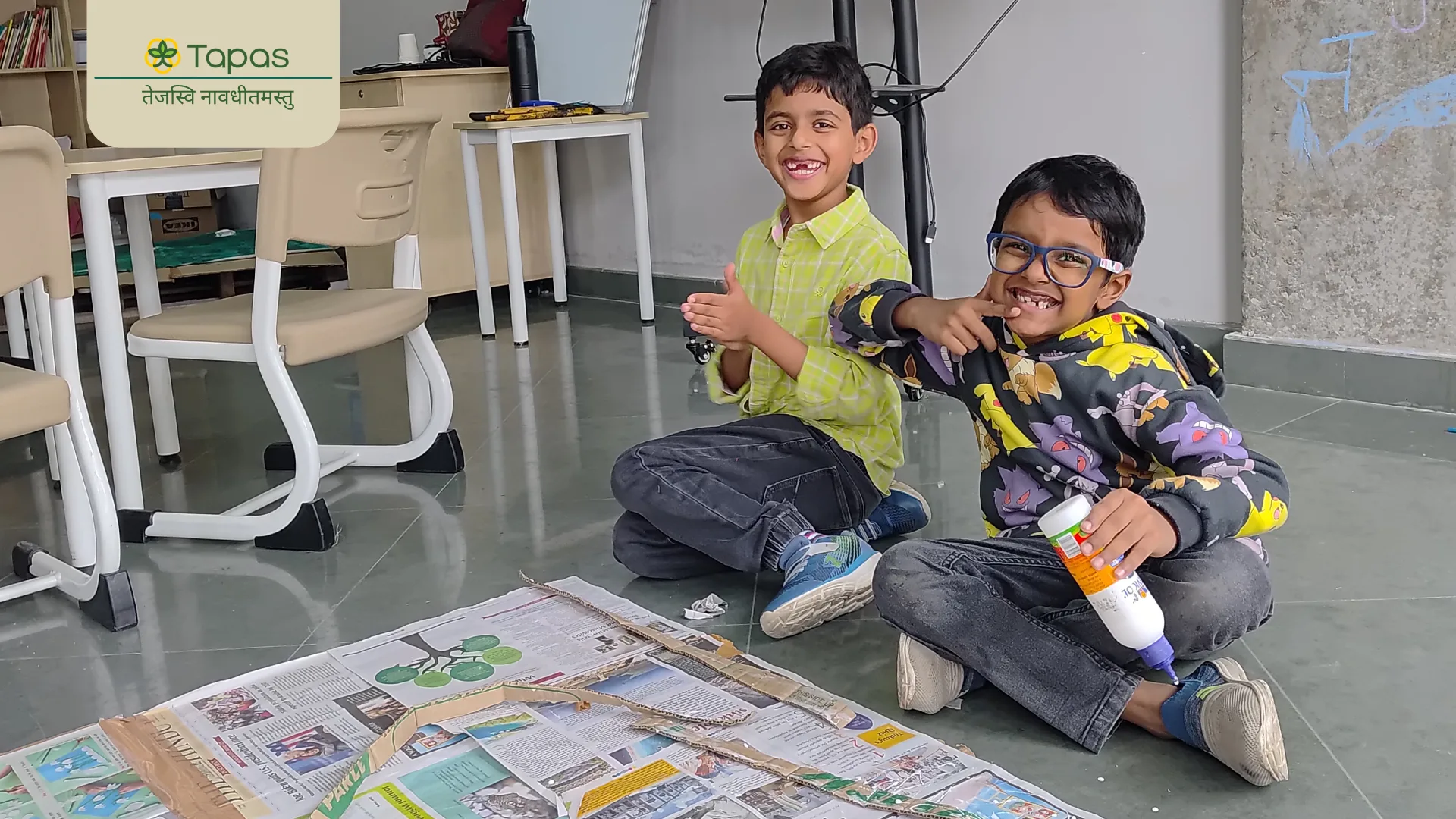
What if the future of education lies in the intelligence of the past?
India’s conventional learning systems focused on character, curiosity, connection and not just content.
Today, many new-age schools are rediscovering these principles.
They are blending ancient wisdom with modern methods to create meaningful learning experiences.
This is the ethos of Indian educational philosophy in modern schools.
It centres on values, balance, and holistic development. Thus, preparing children not just for exams, but for life.
At Tapas Education in South Bangalore, these concepts are not just ideas.
They are part of everyday learning.
Children explore, reflect, collaborate, and grow through experiences deep-rooted in both tradition and innovation.
In this blog, you will understand:
What Indian educational philosophy means in today’s times
How it aids a holistic education approach in India
Why value based education for children matters more than ever
Live examples from Tapas classrooms
How parents can aid these ideas at home
Let’s survey how ageless principles can shape future-ready learners.
What Is Indian Educational Philosophy?
Indian educational philosophy in modern schools pivots on learning beyond academics.
It emphasizes balance between knowledge, values, and self-awareness.
Traditionally, learning included:
Self-reflection
Respect for teachers and peers
Connection with nature
Practical, life-based knowledge
Education was seen as a journey of self-discovery, not just information gathering.
Why This Philosophy Matters Today
The modern world demands more than academic brilliance.
Children need emotional intelligence, ethical thinking, and adaptability.
This is where the holistic education approach in India becomes powerful.
It boosts children to:
Build strong values
Develop resilience
Understand themselves better
Connect learning to real life
As Swami Vivekananda said:
“Education is the manifestation of perfection already in man.”
This idea still holds true today.
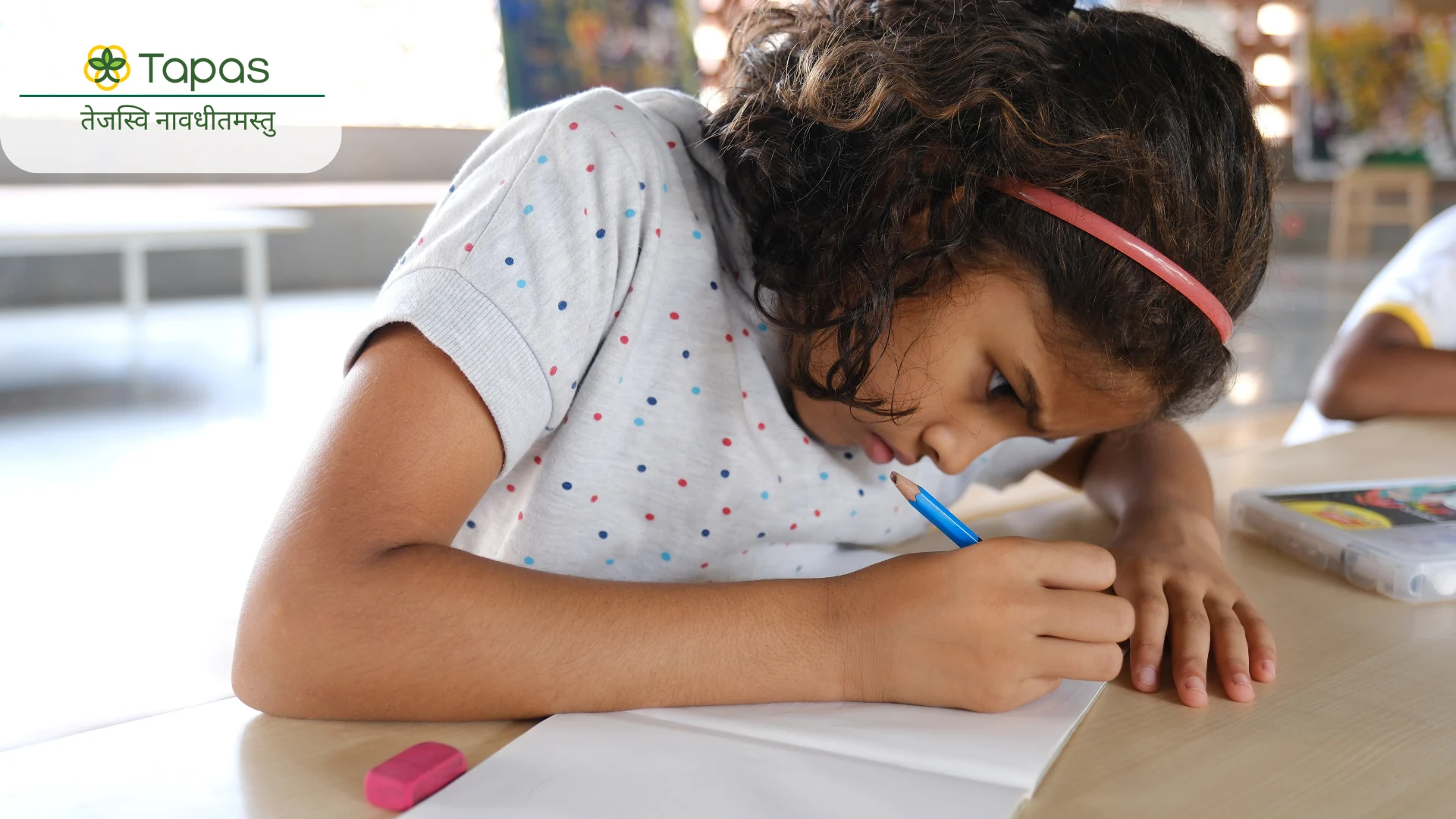
Core Principles of Value-Based Education
Value based education for children focuses on shaping character along with intellect.
Key principles include:
Respect and Empathy
Understanding others and building credible relationships.Self-Awareness
Recognising thoughts, emotions, and actions.Responsibility
Taking ownership of choices and learning.Integrity
Doing what is correct, even without supervision.Balance
Managing academics, emotions, and wellbeing.
These values guide lifelong behaviour and decision-making.
How Tapas Applies Indian Educational Philosophy
At Tapas Education, these principles are entwined into daily learning.
Principle | Classroom Practice | Student Outcome |
Reflection | Daily Sharing Circles | Emotional Awareness |
Community Learning | Group Projects | Empathy and Teamwork |
Nature Connection | Outdoor Sessions | Calmness and Curiosity |
Inquiry Learning | Student-Led Questions | Critical Thinking |
Real Classroom Example
Students once explored the idea of “community responsibility.”
They pinpointed local issues, spoke to residents, and created awareness campaigns.
They learned values, communication, and problem-solving together.
Benefits of Holistic Education Approach in India
A holistic education approach in India builds strong, future-ready learners.
Here are the key benefits:
Stronger Character Development
Children understand right from wrong.Better Emotional Intelligence
They manage emotions effectively.Improved Decision-Making Skills
They think before acting, no hasty decisions.Greater Confidence
They trust their own abilities singularly and collboratively.Lifelong Learning Mindset
Curiosity continues beyond school, through life.
How These Principles Prepare Future-Ready Learners
Future-ready learners need more than knowledge.
They need adaptability, ethics, ideals and self-awareness.
Indian philosophy supports this by:
Encouraging reflection over reaction
Promoting learning through experience
Balancing individual growth with community awareness
This generates learners who can think, lead, and contribute meaningfully.
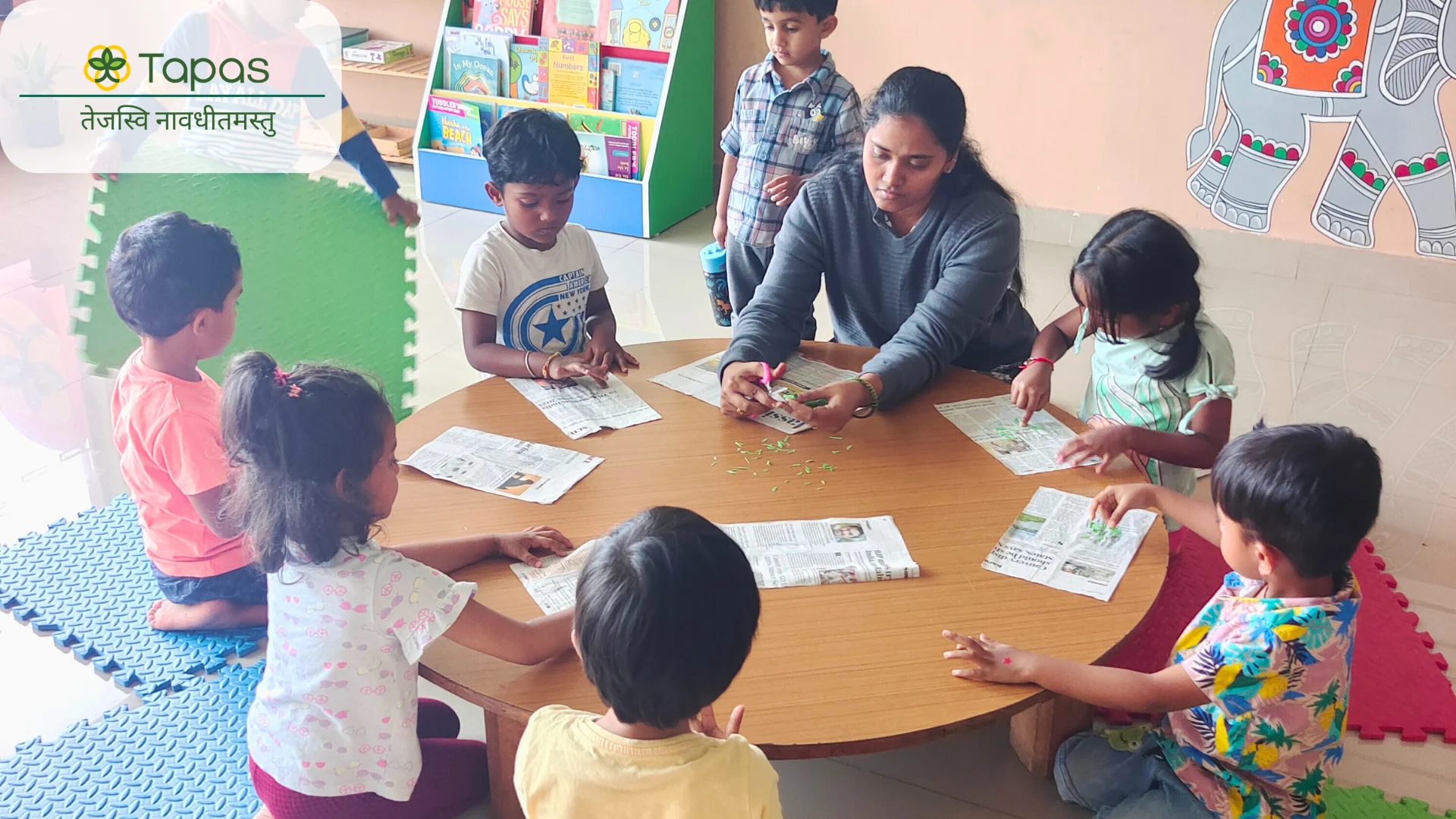
How Parents Can Support Value-Based Learning
Parents play an important role in reinforcing these values.
Try these simple practices at home:
Encourage open conversations about right and wrong
Model respectful behaviour at home
Involve children in family decisions
Promote gratitude and reflection
Limit comparison and focus on growth
Small habits build strong values over time.
Conclusion
The future of education does not lie only in new technology.
It lies in merging innovation with timeless wisdom.
Indian educational philosophy in modern schools offers a balanced path forward.
It builds learners who are thoughtful, confident, and grounded.
At Tapas Education , this philosophy shapes every classroom experience.
Children grow academically, emotionally, and ethically together.
Want your child to experience meaningful, value-based learning?
Check Tapas Education in South Bangalore and discover education rooted in wisdom and designed for the future.
Frequently Asked Questions
What is Indian educational philosophy in modern schools?
Indian educational philosophy in modern schools focuses on holistic learning by combining values, self-awareness, and academics to support overall child development.How does a holistic education approach in India benefit students?
A holistic education approach in India builds emotional intelligence, critical thinking, and real-life skills beyond traditional academic learning.Why is value based education for children important today?
Value based education for children helps develop empathy, responsibility, and ethical thinking, preparing them for life beyond exams.How do schools implement Indian educational philosophy effectively?
Schools apply Indian educational philosophy in modern schools through experiential learning, reflection activities, and collaborative projects.Can parents support value based education for children at home?
Yes, parents can support value based education for children by encouraging open discussions, modeling good behaviour, and promoting self-reflection.