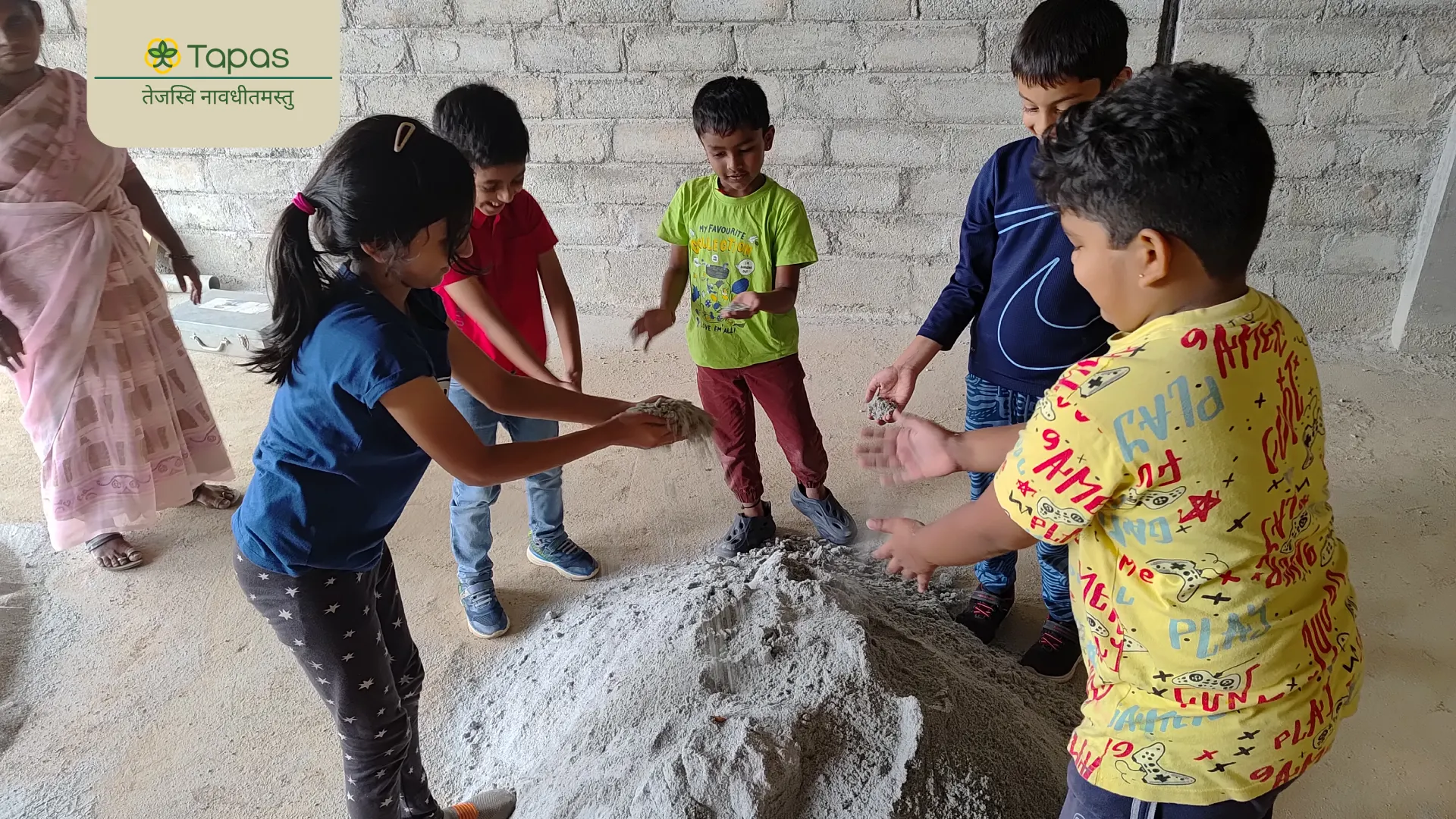
What if your child lapped science up by visiting a lake instead of reading a chapter?
Or understood economics by interacting with a local market?
This is not a futuristic epiphany.
It is already happening through field based learning in schools across India.
Children today need more than just textbook knowledge.
They need experiences that connect learning to the real world.
That is why schools are adopting outdoor learning programs for students as part of everyday curriculum in education.
At Tapas Education in South Bangalore, learning often moves beyond classroom walls.
Students survey communities, nature, and real-life environments to understand concepts deeply.
In this blog, you will discover:
What field-based learning actually means
Why it is gaining popularity in India
Key benefits of experiential learning
How this approach develops future-ready learners
Let’s find out why learning outside the classroom is changing education.
What Is Field-Based Learning?
Field based learning in schools means students learn through real-world experiences outside the classroom.
Learning happens in environments where concepts naturally exist.
Examples include:
Visiting farms to learn agriculture
Exploring lakes for environmental science
Observing markets for economic understanding
Studying communities for social awareness
This approach is part of experiential education, where learning happens through doing and observing.
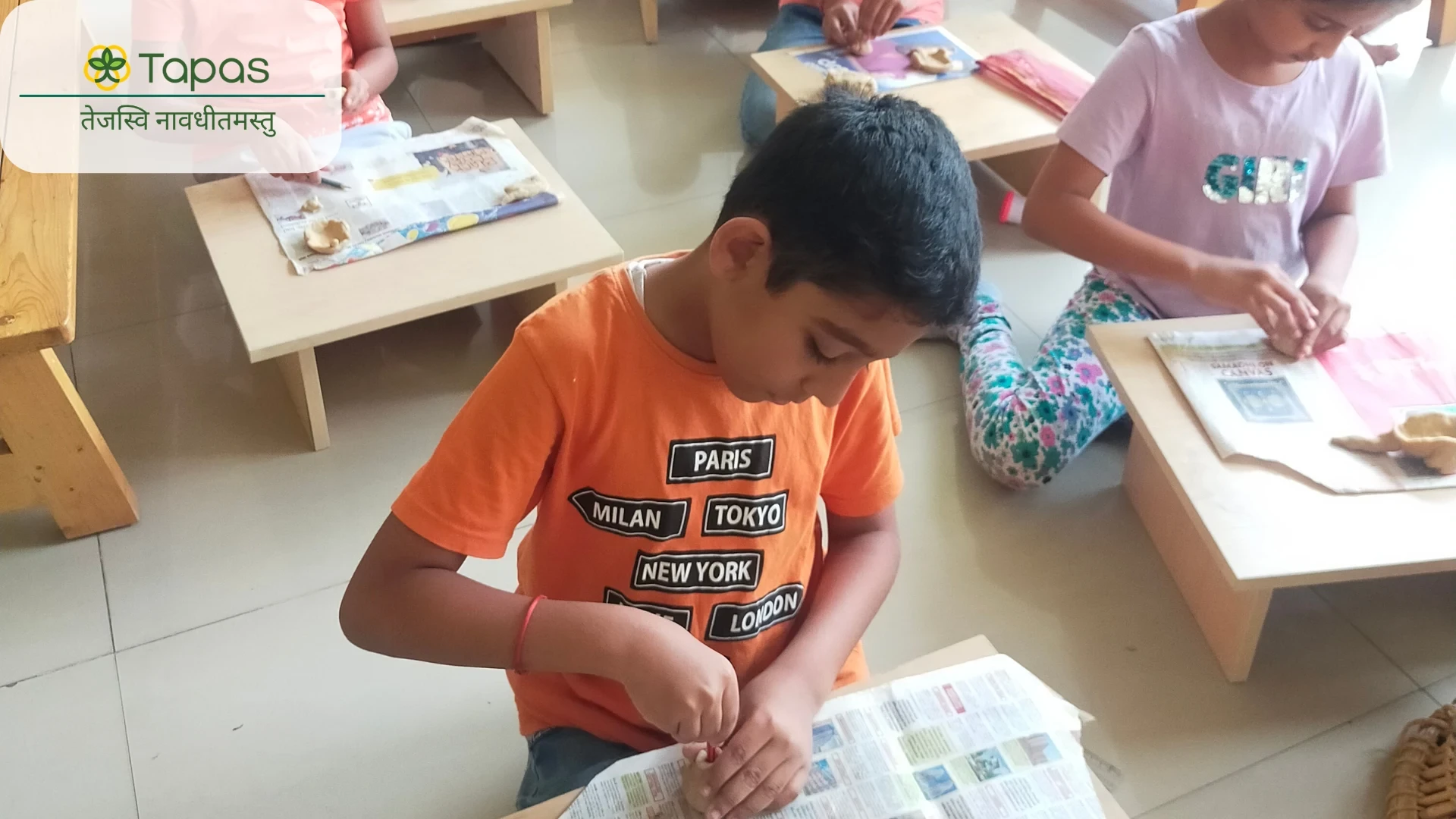
Why Field-Based Learning Matters Today
Conventional learning often feels disconnected from reality.
Students struggle to understand why they learn certain topics.
Field-based learning solves this by making learning pertinent.
It supports:
Real-world understanding
Better memory retention
Active engagement
Curiosity-driven exploration
Research shows students recall more when they experience concepts first hand.
As Confucius said:
“I hear and I forget. I see and I remember. I do and I understand.”
Key Benefits of Outdoor Learning Programs
Outdoor learning programs for students provide powerful learning results.
Here are the most important benefits:
Deeper Concept Clarity
Real-world observation makes hypothetical ideas easier to understand.Stronger Curiosity
Students ask more questions when learning feels real.Better Physical and Mental Health
Outdoor environments lessen stress and improve focus.Improved Social Skills
Students interact, collaborate, and communicate naturally.Environmental Awareness
Students develop respect for nature and sustainability.Confidence Building
Experiential learning inspires independence and decision-making.
How Field-Based Learning Works Step by Step
At Tapas, field-based learning follows a structured process.
Introduction of Concept
Students are introduced to a topic in class.Field Exploration
They visit real-life environments to observe and interact.Data Collection
Students take notes, ask questions, and gather insights.Discussion and Reflection
Back in the classroom, students share findings and perspectives.Application
Students apply learning through projects or presentations.
This ensures learning remains both engaging and meaningful.
Real Examples from Tapas Education
At Tapas Education, field-based learning is an integral part of everyday learning.
ACTIVITY | LEARNING AREA | OUTCOME |
Lake Visit | Environmental Science | Ecosystem Understanding |
Market Survey | Maths + Economics | Data Analysis |
Community Interaction | Social Studies | Empathy and Awareness |
Farm Visit | Biology | Food Systems Understanding |
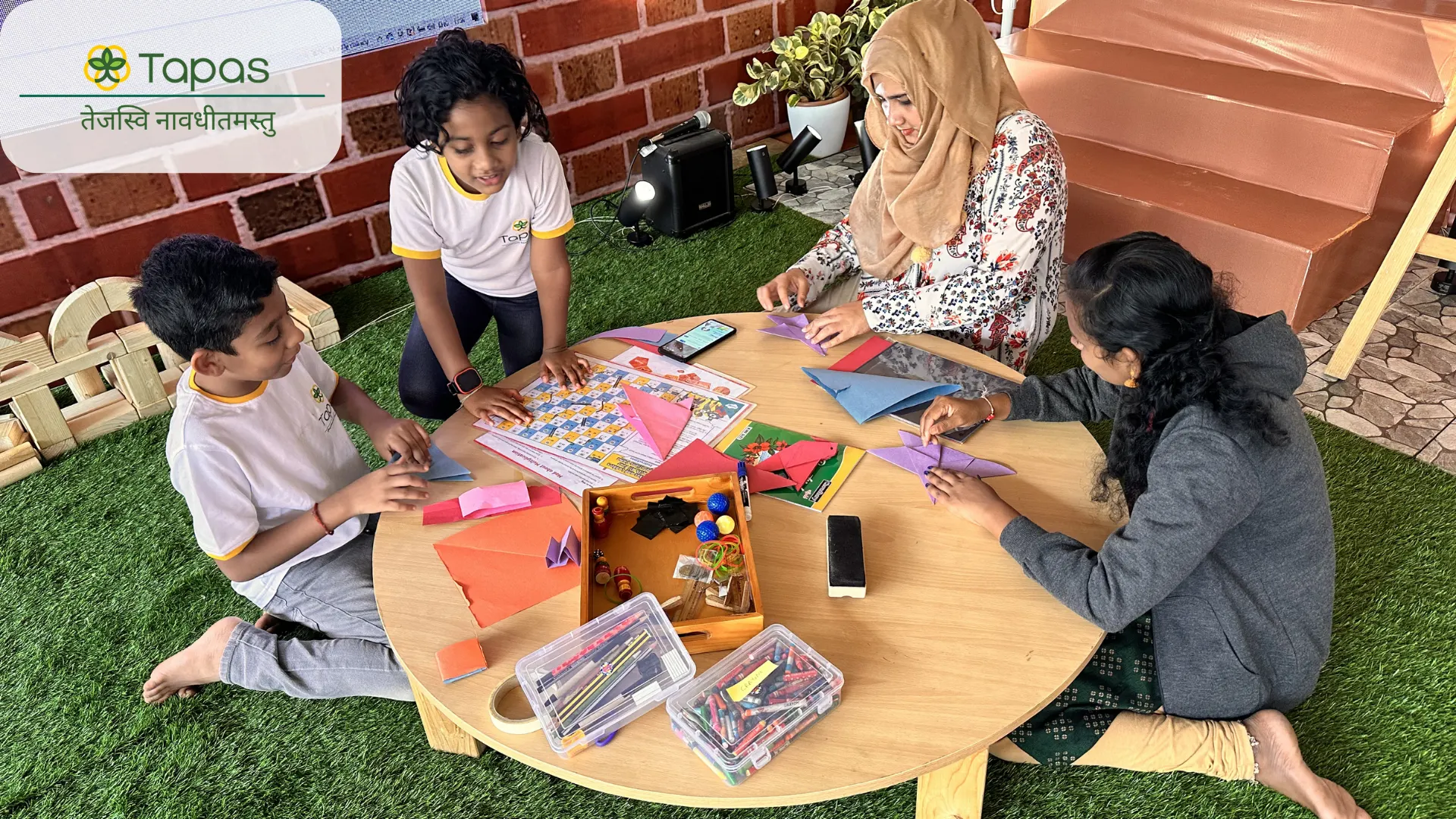
Case Study
Students once studied waste management by visiting local areas.
They observed waste collection systems and interviewed workers.
Later, they created awareness campaigns in their own community.
This merged learning, responsibility, and action.
How Experiential Learning Builds Future Skills
Experiential education examples in India show strong results.
Students become active learners instead of passive listeners.
Field-based learning helps students:
Think crucially
Solve real-life problems
Adapt to new situations
Connect learning across subjects
These skills are vital for future success.
How Parents Can Support Field-Based Learning
You can encourage real-world learning outside school too.
Try these simple ideas like:
Visit parks and discuss ecosystems
Involve children in shopping and budgeting
Encourage observation during travel
Ask open-ended questions about surroundings
Affix daily experiences to school topics
These small actions strengthen learning naturally.
Conclusion
Education becomes meaningful when it is joined to real life.
Field-based learning bridges the gap between theory and experience.
Field based learning in schools assists children understand the world, not just memorise it.
It builds curiosity, confidence, and responsibility together.
At Tapas Education , outdoor learning is not an extra activity.
It is the core being of how children learn and grow.
Want to see learning beyond the classroom?
Visit Tapas Education in South Bangalore and experience education that connects children to the real world.
Frequently Asked Questions
What is field based learning in schools?
Field based learning in schools involves learning outside the classroom through real-world experiences, helping students connect theory with practical understanding.How do outdoor learning programs for students improve learning?
Outdoor learning programs for students enhance engagement, critical thinking, and problem-solving by allowing students to learn through hands-on activities.What are some experiential education examples in India?
Common experiential education examples in India include farm visits, nature walks, community projects, and field trips that promote real-life learning.Why is field based learning in schools important today?
Field based learning in schools builds curiosity, confidence, and life skills, making education more meaningful and relevant for students.How can schools implement outdoor learning programs for students effectively?
Schools can design outdoor learning programs for students with structured activities, guided reflection, and real-world problem-solving tasks.