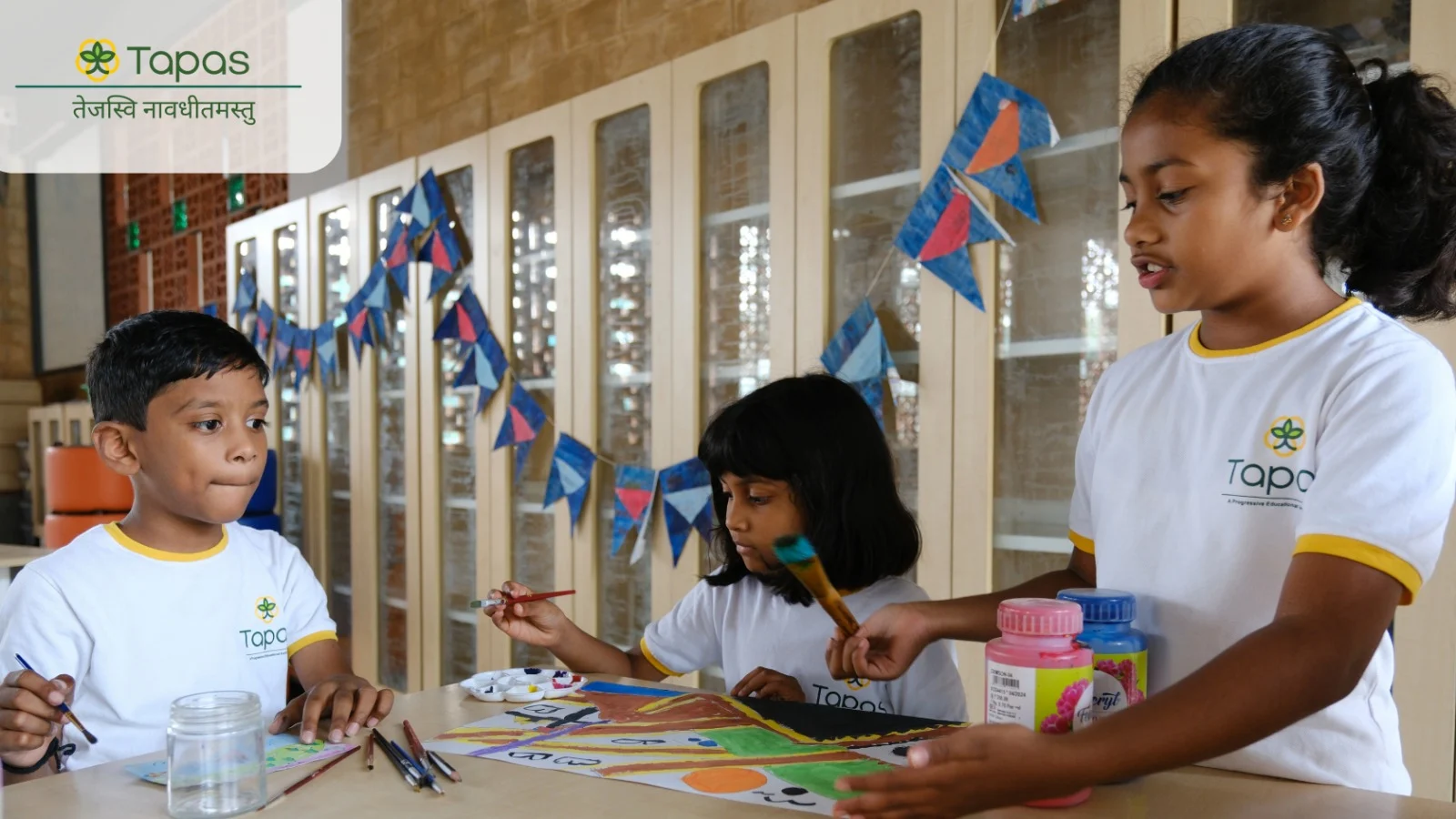
Ever wonder why some children speak confidently while others hesitate to raise their hands?
Confidence is not something children are simply born with.
It develops rather slowly through everyday experiences, encouragement, and safe learning environments.
Many parents today worry about confidence more than marks.
They want children who can express ideas, handle challenges, have self-belief and trust themselves.
Schools play a major role in shaping this confidence.
The right environment can help children feel capable, valued, safe and emotionally secure.
At Tapas Education in South Bangalore, confidence-building is part of everyday learning.
Students traverse ideas, collaborate, present projects, and reflect on their experiences regularly.
In this blog, you will learn:
How schools build confidence in students
Why confidence matters for lifelong success
Functional confidence building activities for kids
Practical ways to improve child confidence in school
What parents should examine in learning environments
Let’s explore how schools help children grow into confident learners.
Why Confidence Matters in Education
Confidence affects how children learn, communicate, and respond to challenges.
Confident children are more likely to:
Ask questions freely
Try new things
Recover from mistakes
Participate actively
Without confidence, even talented children may hesitate to explore their potential and prospects.
How Schools Build Confidence in Students
How schools build confidence in students depends greatly on the learning environment.
Schools that underpin only on marks often increase fear of failure.
Progressive schools pivot on growth, participation, and emotional safety instead.
Confidence grows when children:
Feel heard and respected
Learn without fear of judgment
Receive encouragement consistently
Get opportunities to lead and express themselves
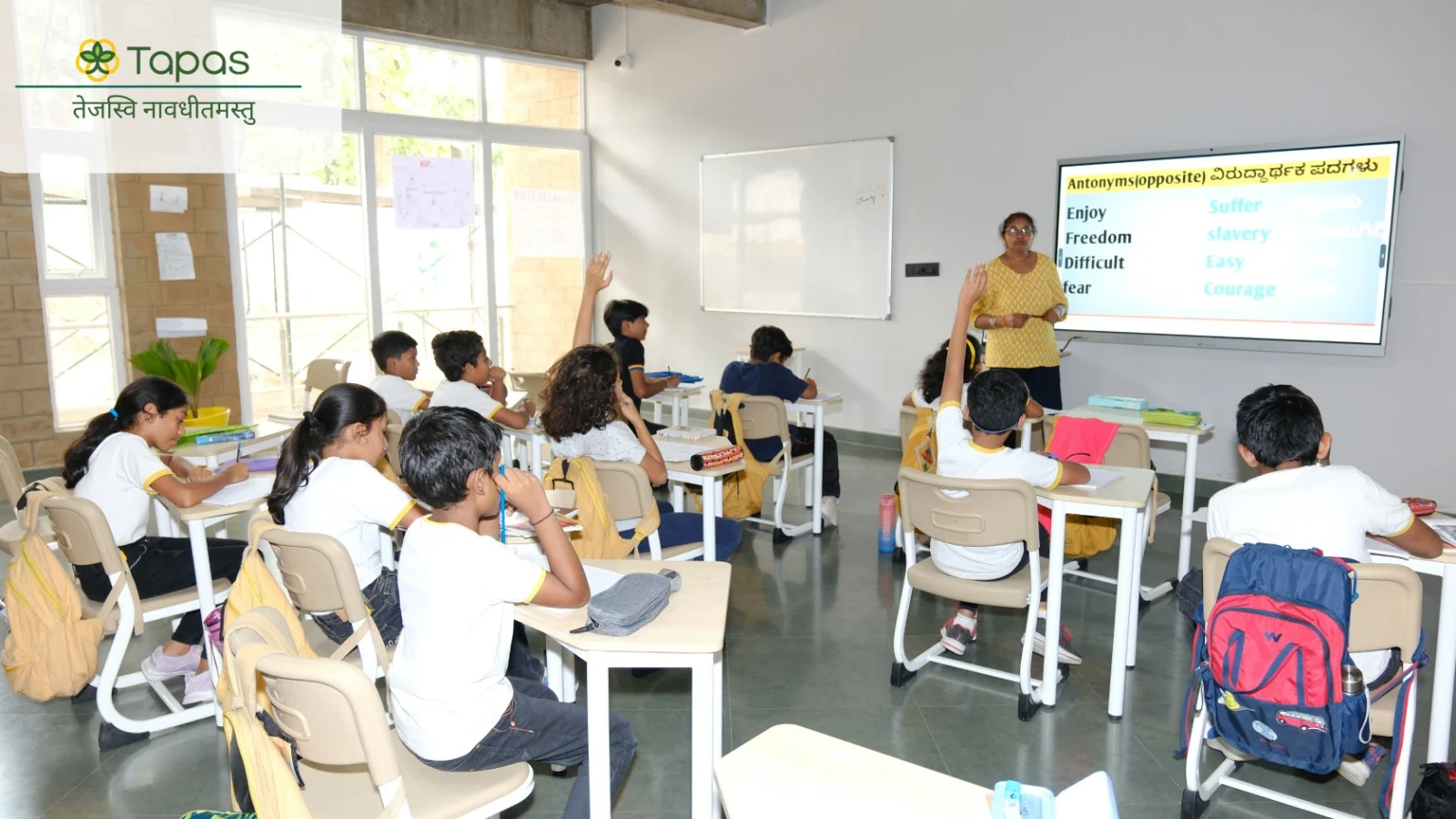
Key Ways Schools Upgrade Child Confidence
Here are the most effective ways to improve child confidence in school:
1. Encouraging Student Voice
Students are encouraged to share ideas and opinions on a regular basis.
This helps them trust their thinking.
2. Creating Safe Learning Environments
Children participate more when errors are treated as learning opportunities.
3. Offering Leadership Opportunities
Simple responsibilities build ownership and self-belief.
Examples comprise:
Leading group discussions
Managing classroom activities
Presenting projects
4. Utilising Experiential Learning
Hands-on learning helps children feel capable and independent.
5. Centered on Effort, Not Perfection
Children become more confident when progress matters more than comparison.
Confidence Building Activities for Kids
Schools employ many practical activities to build confidence naturally.
Effective Confidence Building Activities Include:
Project presentations
Group discussions
Storytelling sessions
Outdoor learning experiences
Collaborative problem-solving tasks
Reflection circles
These activities encourage expression and participation.
How Tapas Builds Student Confidence
At Tapas Education, confidence-building is integrated into daily learning.
ACTIVITY | PURPOSE | STUDENT OUTCOME |
Reflection Circles | Emotional Expression | Self-awareness |
Project Presentations | Public Speaking | Confidence |
Group Collaboration | Teamwork | Communication Skills |
Inquiry-based Learning | Independent Thinking | Decision-making |
Real Tapas Classroom Example
A shy student once hesitated to participate during discussions.
It took some time but project presentations and group activities helped them speak confidently.
By the end of the term, they volunteered to lead classroom discussions.
Why Experiential Learning Builds Confidence Faster
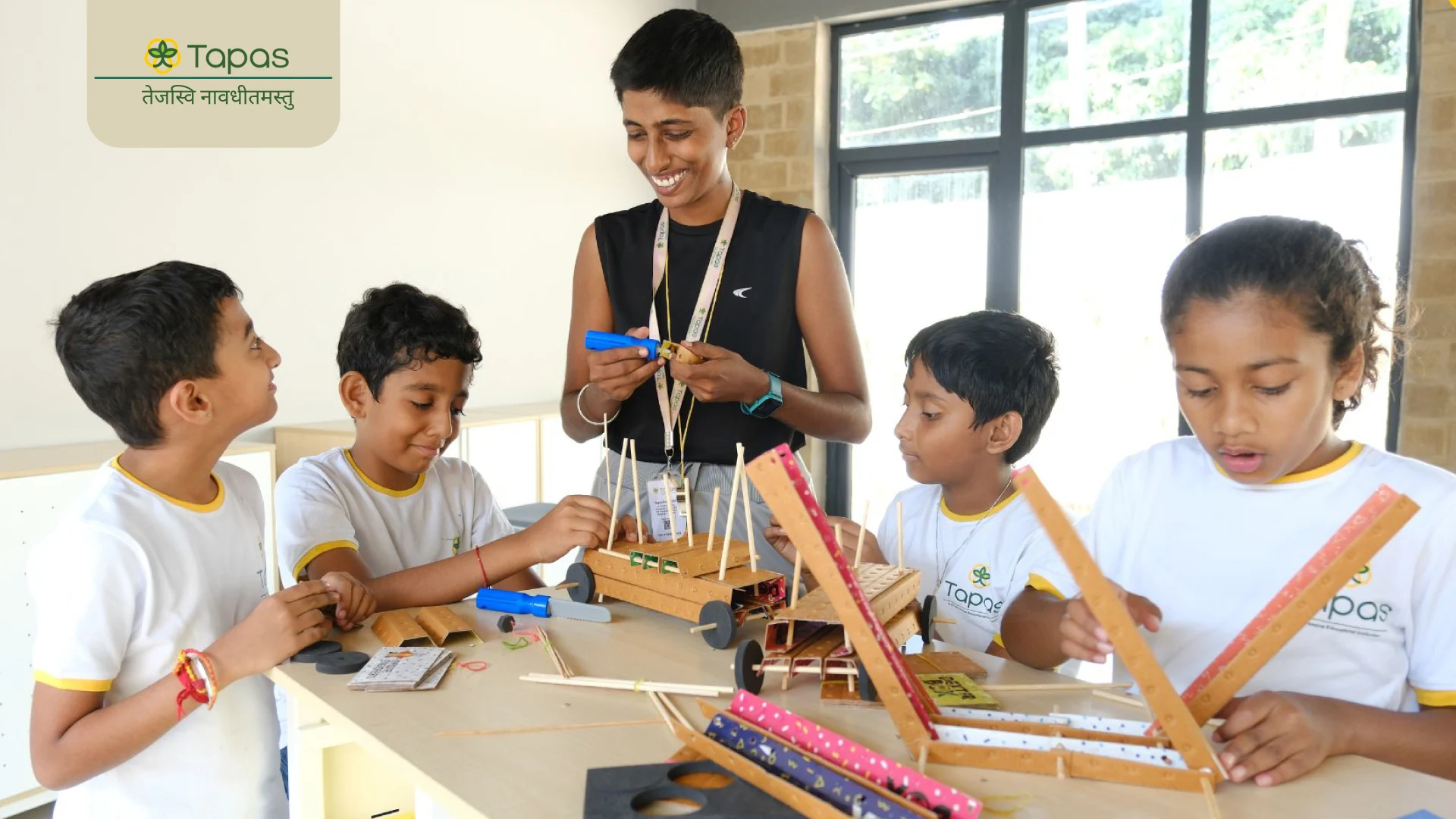
Experiential learning gives children direct ownership of learning.
This is when children:
Build models
Conduct experiments
Present findings
Solve real problems
They begin trusting their abilities naturally.
Confidence grows through action, not lectures.
What Parents Can Do at Home
Parents play a major and quite a powerful role in confidence-building too.
Try these simple strategies daily:
Encourage independent decision-making
Avoid constant comparison
Praise effort and persistence
Listen without interrupting
Allow children to solve small problems independently
Such small moments also build lasting confidence.
What Parents Should Look for in Schools
When visiting schools, observe carefully.
Look for:
Student participation levels
Emotional safety in classrooms
Opportunities for public speaking
Collaborative learning environments
Encouraging teacher-student interactions
These factors strongly govern confidence development.
Conclusion
Confidence is one of the most important gifts education can provide.
It formulates how children learn, communicate, and face challenges.
Understanding how schools build confidence in students assists parents make better educational choices.
The right school environment can transmute how children see themselves.
At Tapas Education , confidence grows through expression, exploration, scrutiny and meaningful learning experiences.
Children learn to trust their ideas and voices naturally.
Looking for a school that nurtures confident learners?
Visit Tapas Education in South Bangalore and discover learning that helps children believe in themselves.
Frequently Asked Questions
How schools build confidence in students through daily learning?
Schools build confidence in students by encouraging participation, communication, teamwork, and independent thinking in everyday learning activities.
What are the best ways to improve child confidence in school?
The best ways to improve child confidence in school include positive feedback, experiential learning, leadership opportunities, and supportive teachers.
What are some confidence building activities for kids in schools?
Confidence building activities for kids include public speaking, group projects, sports, creative arts, and classroom discussions.
Why is confidence important for student growth?
Confidence helps students participate actively, improve communication skills, and perform better academically and socially.How do confidence building activities for kids support learning?
Confidence building activities for kids encourage creativity, decision-making, problem-solving, and emotional development in school environments.