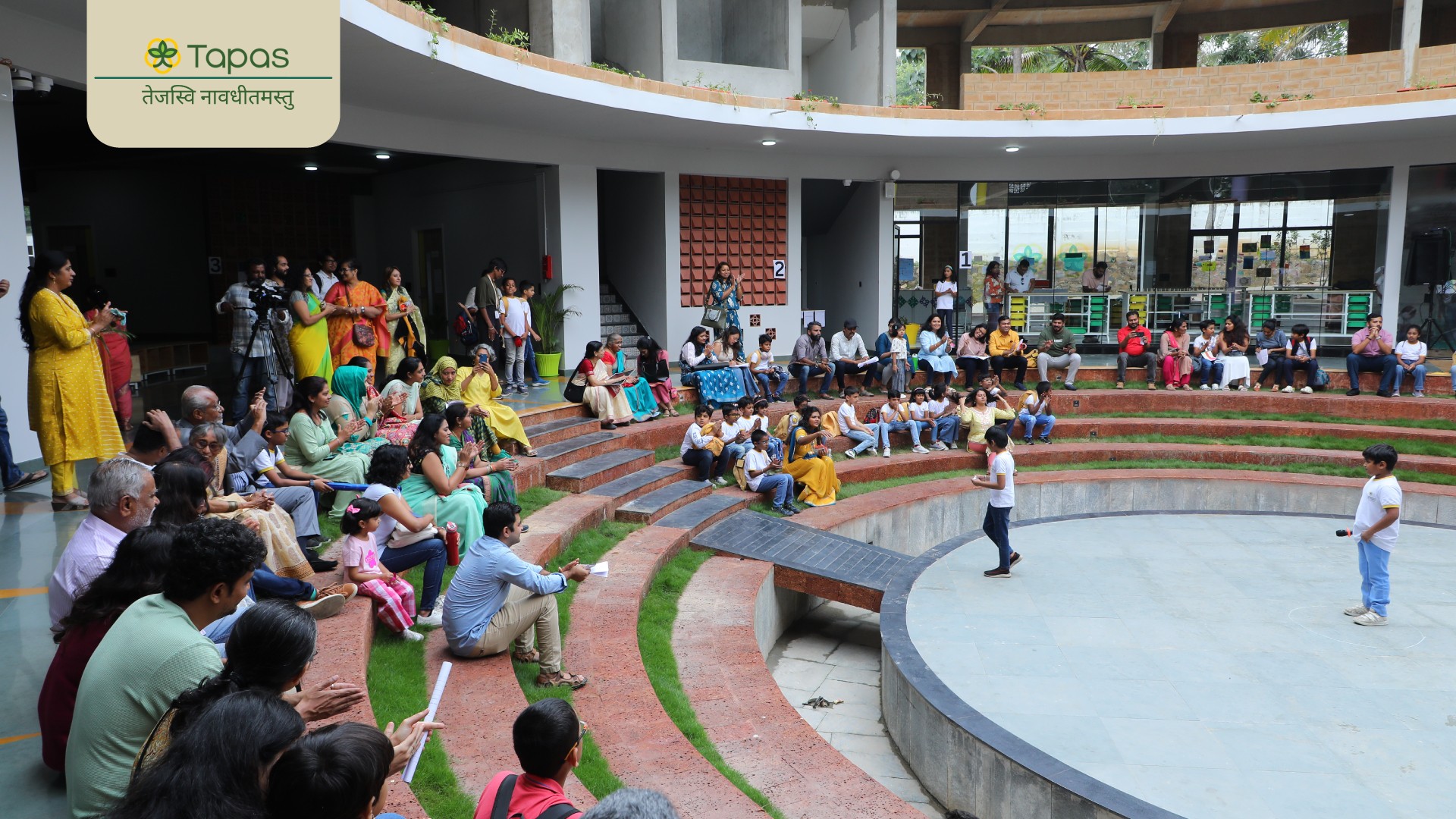
What if your child could speak confidently, express ideas clearly, and convey without fear?
Many children grapple with communication despite doing well academically.
This is a common gap in conventional education.
Students often learn concepts but do not get enough opportunities to speak, present, or express themselves.
Confidence in communication comes from practice, not theory.
This is where experiential learning benefits for students become powerful.
Experiential learning allows children to engage, present, collaborate, and reflect.
It naturally builds strong communication skills through actual experiences.
At Tapas Education in South Bangalore, communication is not a separate subject.
It is part of everyday learning through projects, discussions, and collaborative tasks.
In this blog, you will understand:
How experiential learning builds communication skills
Why traditional methods fall short
Real project based learning examples in India
How schools develop confident communicators
What parents can do to support this
Let’s explore how experience turns learners into confident speakers.
What Is Experiential Learning?
Experiential learning means learning through doing and reflecting.
Students actively participate instead of passively listening.
It comprises:
Projects and presentations
Group discussions
Real-world problem-solving
Reflection and feedback
This approach boosts both understanding and expression.
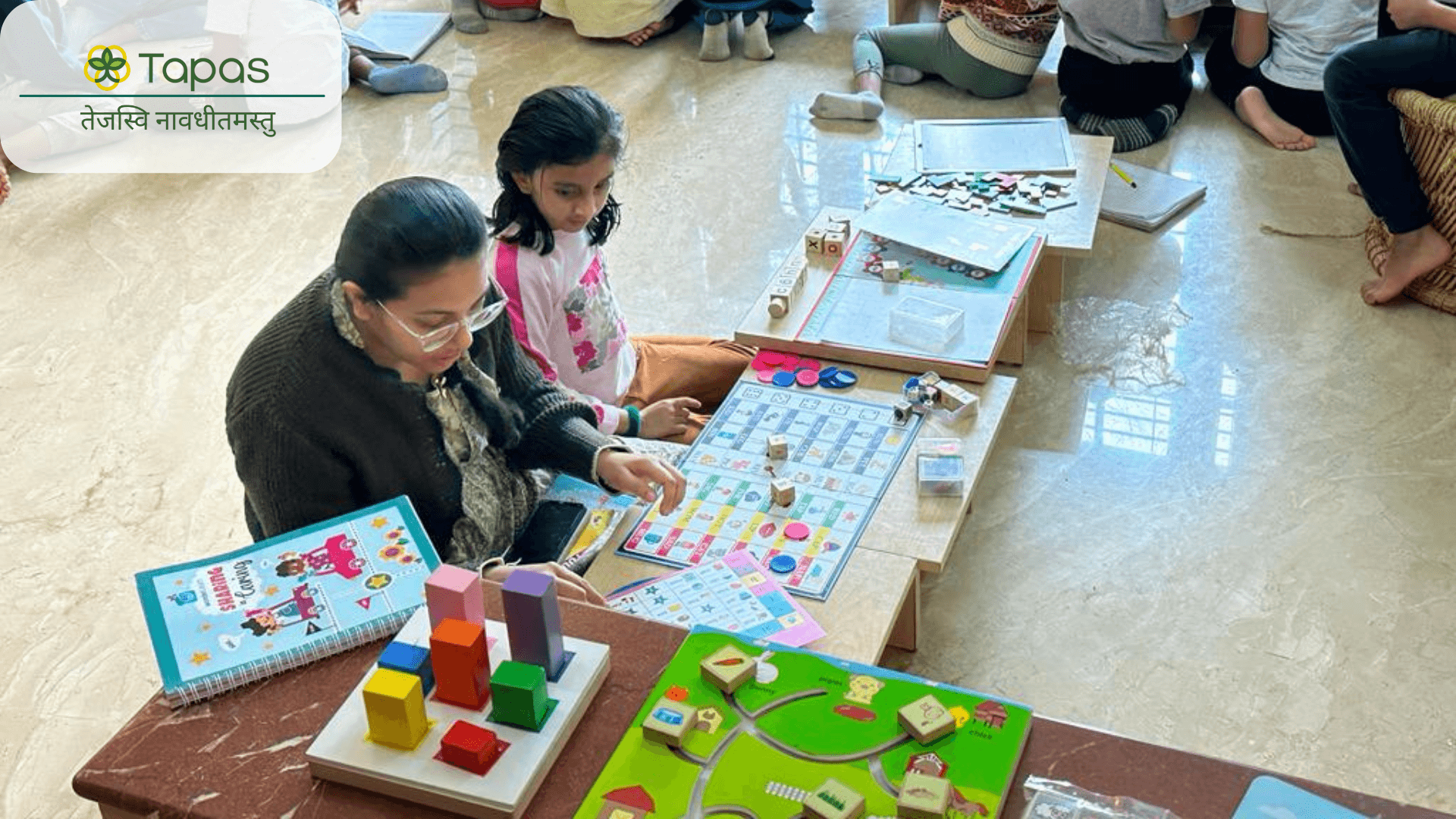
Why Communication Skills Need Experience
Communication is not built through textbooks.
It develops through practice and interaction.
Traditional classrooms often limit this by:
Centring on written answers
Reducing student participation
Avoiding open discussions
This creates hesitation and lack of confidence.
Communication skills development in schools needs real engagement.
What Experiential Learning Offers
Experiential learning promises confident and expressive learners.
It helps students:
Speak clearly and confidently
Share ideas without fear
Listen and respond productively
Present thoughts in structured ways
Confidence grows through repeated real experiences.
What Learning Looks Like
Visualize a classroom where:
Students present their ideas regularly
Group discussions are part of daily learning
Questions are encouraged
Feedback is constructive
Students are active voices, not silent listeners.
Communication becomes natural, not imposed.
How Tapas Builds Communicators
At Tapas Education, communication develops through structured experiences.
ACTIVITY | PRACTICE | OUTCOME |
Project Presentations | Sharing Ideas | Confidence |
Group Discussions | Peer Interaction | Listening Skills |
Reflection Circles | Expressing Emotions | Clarity |
Role Plays | Real-Life Scenarios | Communication Fluency |
Real Classroom Example
Tapas students worked on a community project about waste management.
They presented findings to peers and discussed solutions.
Over time, even shy students began speaking confidently.
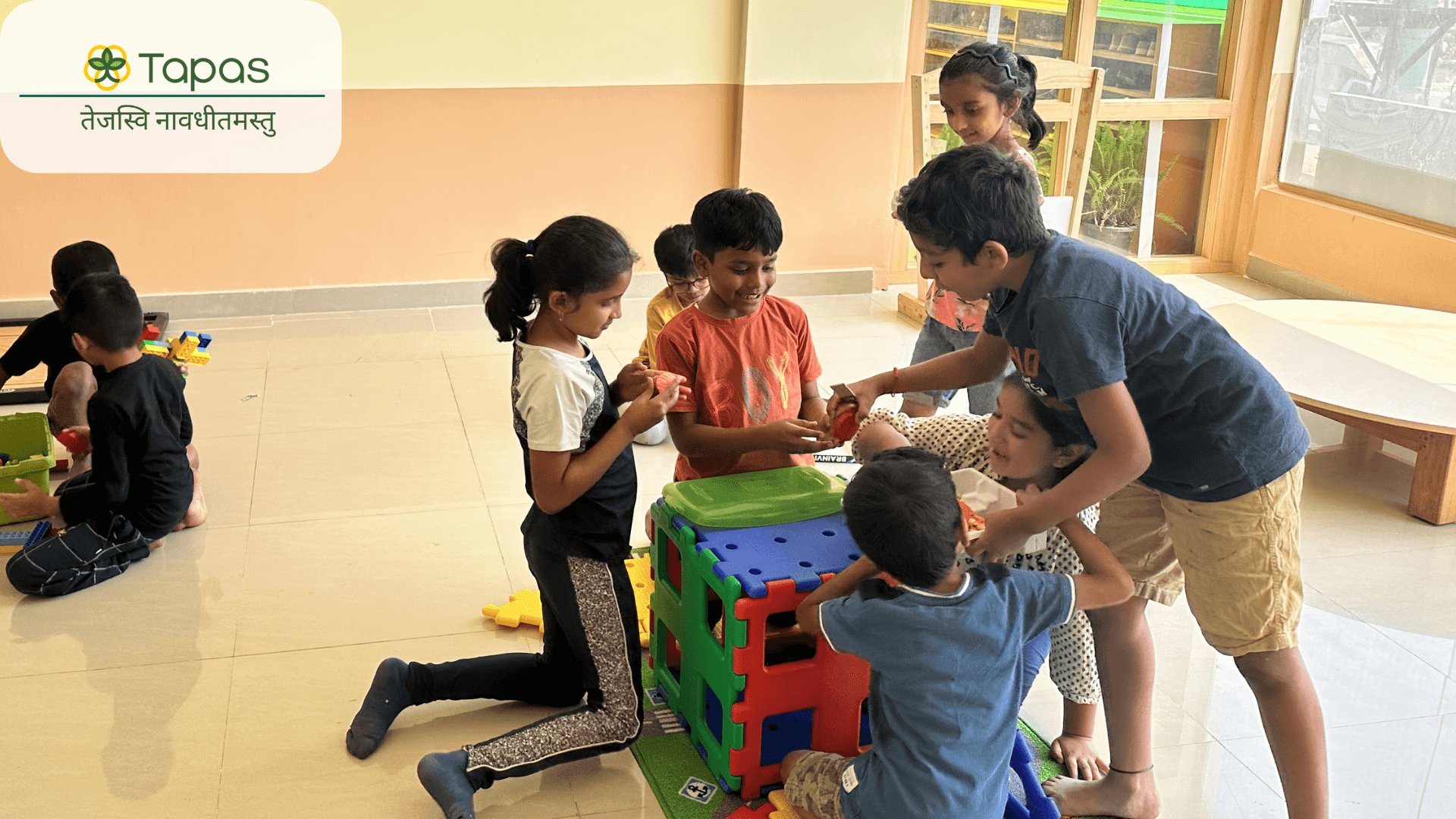
Experiential Learning Benefits for Students
Here are the key experiential learning benefits for students:
Upgraded Confidence
Students speak more freely and clearly.Better Clarity of Thought
They organise ideas before expressing them.Stronger Listening Skills
Communication becomes two-way.Functional Collaboration
Students share and build ideas together.Real-World Communication Skills
They learn to present, discuss, and persuade.
Project-Based Learning Examples in India
Many schools utilise project based learning examples in India to build communication.
Examples include:
Community awareness campaigns
Environmental projects
Market surveys and presentations
Storytelling and role-play activities
These activities require students to communicate diligently.
How Schools Build Communication Step by Step
Progressive schools follow simple strategies:
Encourage open-ended discussions
Include regular presentations
Use group-based learning
Provide constructive feedback
Generate safe spaces for expression
Teachers guide communication without forcing it.
How Parents Can Assist With Communication Skills
Parents can strengthen communication at home.
Try these:
Encourage daily conversations
Ask open-ended questions
Let children express opinions
Practice storytelling
Appreciate effort, not perfection
Confidence blooms with practice.
Conclusion
Communication is one of the most important and key life skills.
It builds confidence, relationships, and success.
Experiential learning benefits for students go much beyond academics.
It helps children express ideas clearly and confidently.
At Tapas Education , communication grows naturally through daily learning.
Students learn by doing, speaking, and reflecting.
Want your child to become a confident communicator?
Visit Tapas Education in South Bangalore and meet learning that builds voice and confidence.
Frequently Asked Questions
What is landing page conversion optimization?
Landing page conversion optimization is the process of improving elements like design, copy, and CTAs to increase the percentage of visitors who take action on your page.What makes high converting landing pages successful?
High converting landing pages focus on a single goal, clear messaging, strong CTAs, and minimal distractions to guide users toward conversion.How to improve landing page conversions quickly?
To improve landing page conversions, simplify design, use benefit-driven headlines, add trust signals, and optimise your CTA placement and wording.What are the best landing page design best practices?
Landing page design best practices include a clean layout, fast loading speed, mobile optimisation, and a clear value proposition above the fold.Why are high converting landing pages important for businesses?
High converting landing pages help turn traffic into leads or sales, making your marketing campaigns more efficient and improving overall ROI.