Can Collaboration Be More Powerful Than Competition?
From a young age, children are often taught to compete.
They vie for marks, ranks, awards, and recognition.
Competition can stimulate performance.
However, an important question remains:
Are we preparing children for the world they will actually enter?
Today's workplaces, communities, and innovations hardly succeed through individual effort alone.
Most achievements happen when people work together.
This is why educators increasingly discuss collaboration vs competition in education.
The goal is not to banish healthy competition.
The goal is to ensure children also learn how to cooperate, communicate, and contribute as part of a team.
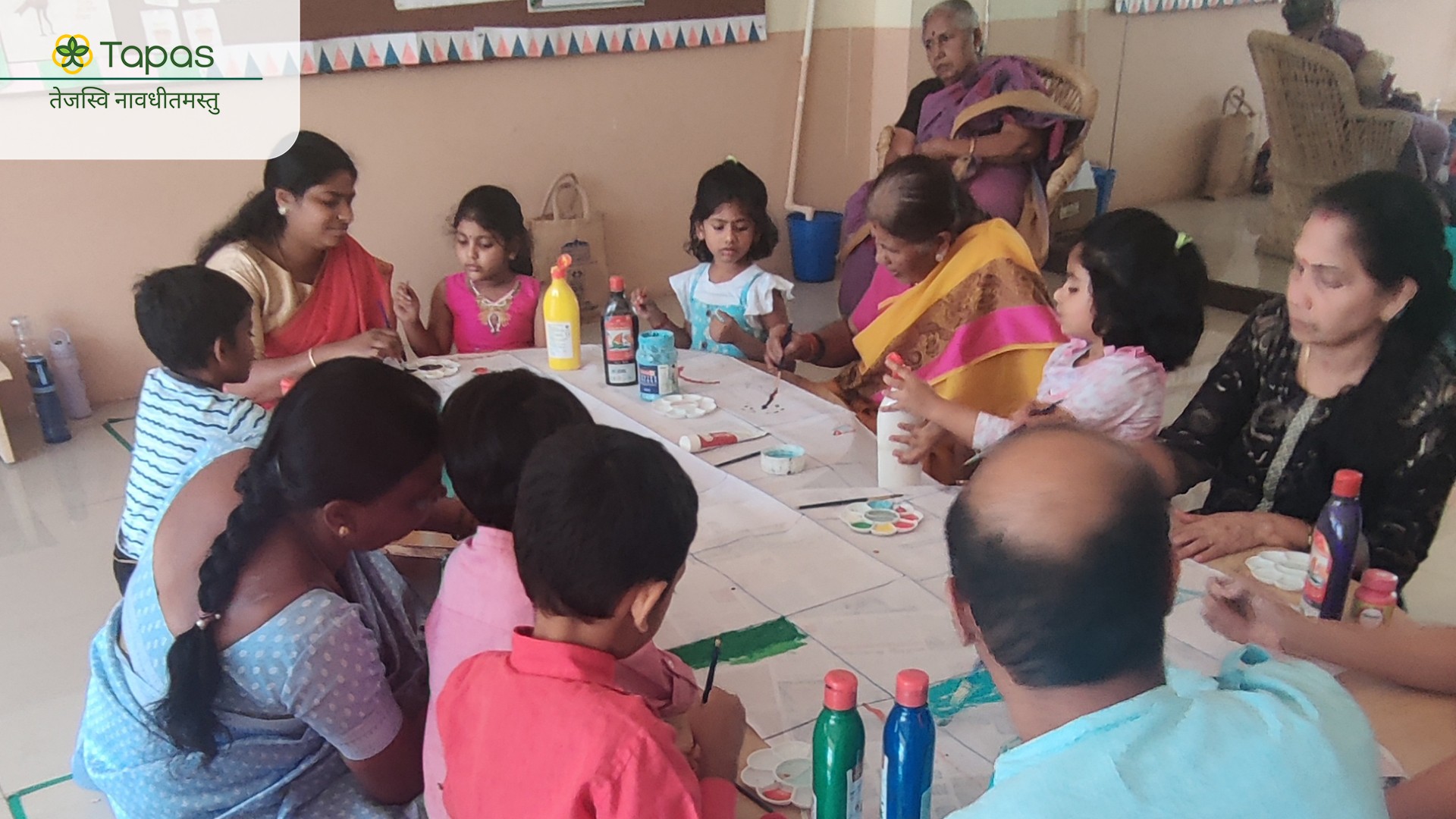
At Tapas Education in South Bangalore, collaboration is a key part of learning.
Students work on projects, solve problems together, share perspectives, and learn from one another.
In this blog, you will learn:
The difference between collaboration and competition
Why teamwork matters in today's world
How schools build teamwork skills
Why collaboration may be one of the most important future-ready potentialities
Let's survey whether working together can be more powerful than competing alone.
What Is Collaboration in Education?
Collaboration means working together towards a shared aim.
Students contribute ideas, skills, and perspectives.
Collaborative learning often comprises:
Group projects
Peer discussions
Problem-solving activities
Shared presentations
Success comes from collective effort.
What Is Competition in Education?
Competition focuses on individual achievement.
Students are often compared through:
Marks
Rankings
Awards
Performance metrics
Competition can encourage effort and discipline.
However, excessive competition can create unnecessary pressure.
Collaboration vs Competition in Education
Both approaches have merit.
The key difference lies in the learning experience.
Competition | Collaboration |
Individual success | Shared success |
Comparison-driven | Contribution-driven |
Focus on winning | Focus on learning |
Limited perspectives | Diverse perspectives |
Personal achievement | Collective growth |
The strongest educational environments equalise both.
Why Collaboration Matters More Today
Modern workplaces depend heavily on teamwork.
Employers increasingly seek people who can:
Convey effectively
Work with diverse teams
Solve problems together
Manage disagreements constructively
These abilities are difficult to evolve through competition alone.
Benefits of Collaborative Learning for Students
The benefits of collaborative learning for students extend far beyond academics.
1. Better Communication Skills
Students learn to express ideas clearly.
They also learn to listen intently.
2. Stronger Problem-Solving
Different perspectives often lead to better solutions.
Collaboration expands thinking.
3. Upped Confidence
Students gain confidence through participation and contribution.
Everyone has a role to play.
4. Refined Empathy
Working with others helps students understand different viewpoints.
Empathy becomes a practical skill.
5. Deeper Learning
Explaining ideas to others strengthens understanding.
Students learn more effectively together.
Teamwork Skills in Modern Education
Teamwork skills in modern education are increasingly important.
These comprise:
Communication
Sharing ideas respectfully and clearly.
Responsibility
Contributing meaningfully to group goals.
Conflict Resolution
Managing differences constructively.
Authority
Guiding others while remaining collaborative.
Adaptability
Working effectively with diverse personalities and situations.
How Tapas Encourages Collaborative Learning
At Tapas Education, collaboration is embedded into everyday learning.
Learning Practice | Student Experience | Outcome |
Group Projects | Shared problem-solving | Teamwork |
Discussion Circles | Listening and sharing | Communication |
Community Projects | Collective action | Responsibility |
Peer Learning | Learning together | Confidence |
Students learn that solidarity breeds success.
Real Classroom Example
Tapas students once explored sustainable waste management practices.
Teams researched different aspects of the problem.
Together they:
Gathered information
Shared findings
Designed solutions
Presented recommendations
The project succeeded because students worked alongside each other.
Each contribution strengthened the final outcome.
Can Competition Still Be Useful?
Yes.
Healthy competition can:
Encourage effort
Build resilience
Inspire improvement
The challenge arises when competition becomes the only nucleus.
Children also need opportunities to collaborate.
Balance matters.
How Parents Can Encourage Collaboration at Home
Parents can aid collaborative habits through everyday activities.
Try:
Family projects
Team games
Shared responsibilities
Group problem-solving discussions
These experiences build cooperation naturally.
Conclusion
The future will not be built by isolated individuals.
It will be built by people who can communicate, cooperate, and solve problems together.
Recognising collaboration vs competition in education helps parents and educators create balanced learning experiences.
While competition has its place, collaboration develops many of the skills children need for life.
The benefits of collaborative learning for students include stronger communication, empathy, creativity, and confidence.
At Tapas Education, students learn that success is not only about personal achievement.
It is also about contributing meaningfully to others.
Looking for a school that fosters teamwork, communication, and future-ready skills?
Visit Tapas Education in South Bangalore and determine the power of collaborative learning.
Frequently Asked Questions
1. What is the difference between collaboration vs competition in education?
Collaboration vs competition in education refers to two different learning approaches. Collaboration encourages students to work together, share ideas, and solve problems as a team, while competition motivates individuals to outperform others. Modern education increasingly combines both approaches, with collaboration helping students develop communication, creativity, and critical thinking alongside healthy competition.
2. What are the benefits of collaborative learning for students?
The benefits of collaborative learning for students include improved communication, stronger problem-solving abilities, better academic performance, higher engagement, and increased confidence. Collaborative learning also prepares students for real-world workplaces where teamwork and shared decision-making are essential.
3. Why are teamwork skills in modern education important?
Teamwork skills in modern education help students develop leadership, communication, adaptability, and conflict-resolution abilities. These skills prepare learners for higher education and professional careers, where collaboration is essential for innovation and workplace success.
4. Is collaborative learning more effective than competitive learning?
Research suggests that collaborative learning often leads to deeper understanding, better knowledge retention, and stronger interpersonal skills. While competition can motivate students to achieve individual goals, collaboration promotes shared learning experiences and long-term skill development, making both valuable when used appropriately.
5. How does collaboration improve student learning outcomes?
Collaboration improves learning outcomes by encouraging students to exchange ideas, learn from diverse perspectives, and solve problems together. The benefits of collaborative learning for students include higher engagement, better critical thinking, improved teamwork skills, and greater academic achievement compared with learning in isolation.